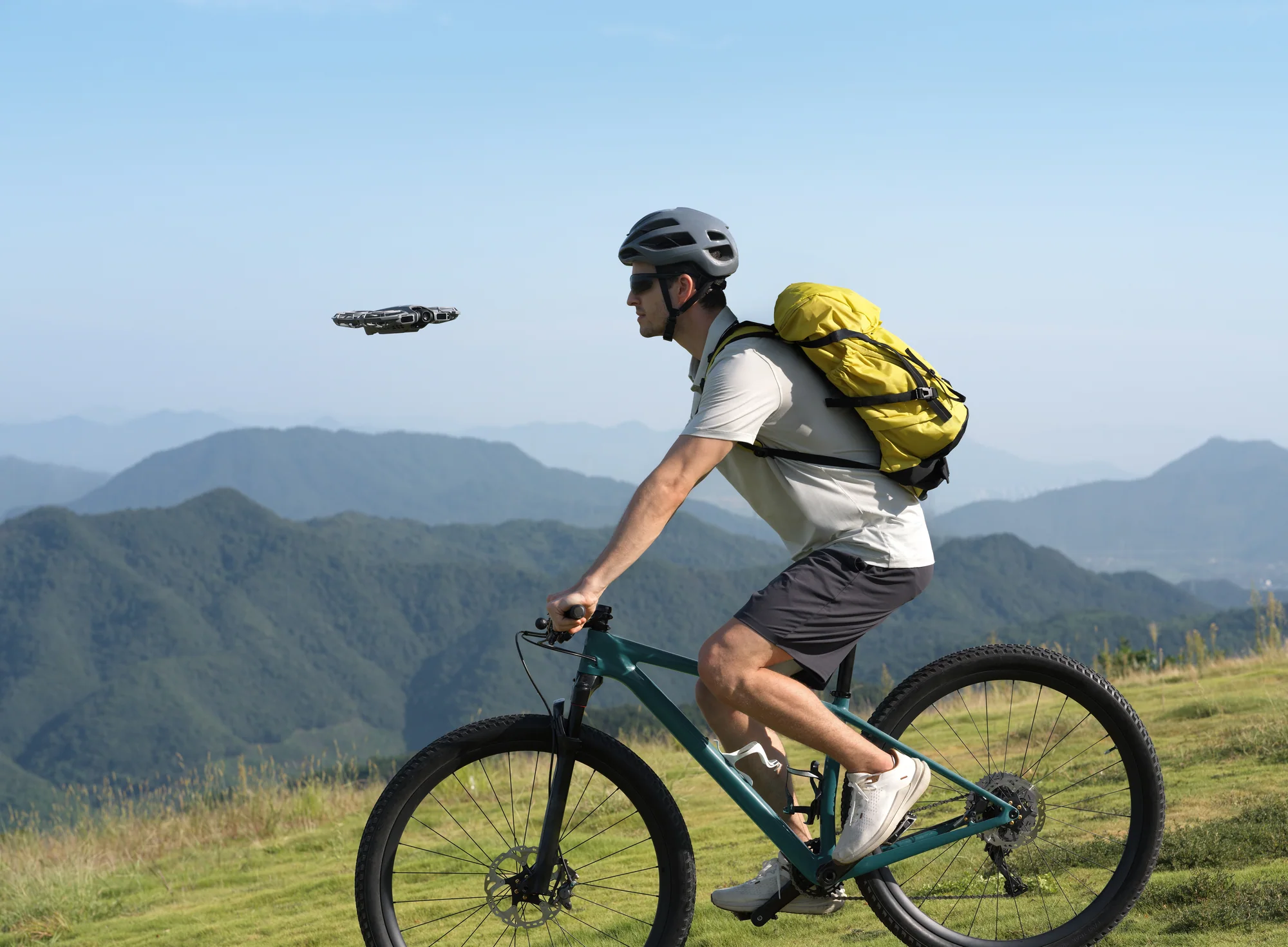
Design the route before choosing Follow.
Walk the complete line at subject speed. Mark wires, branches, blind corners, reflective surfaces, traffic, spectators, animals, recovery points, and the place where the shot must end. A tracking mode does not turn an unsurveyed trail into a set.
For bikes or vehicles, use a private, controlled location with the owner or operator’s permission. Keep public roads and uninvolved people outside the production route.
- Choose one readable movement: straight follow, side track, approach, or retreat.
- Set a corridor and altitude envelope that preserve separation.
- Brief the subject on pace, stops, hand signals, and the abort word.
- Rehearse with the aircraft packed; then run a short low-risk test.
- Keep the pilot’s attention on the aircraft and route, not the monitor alone.
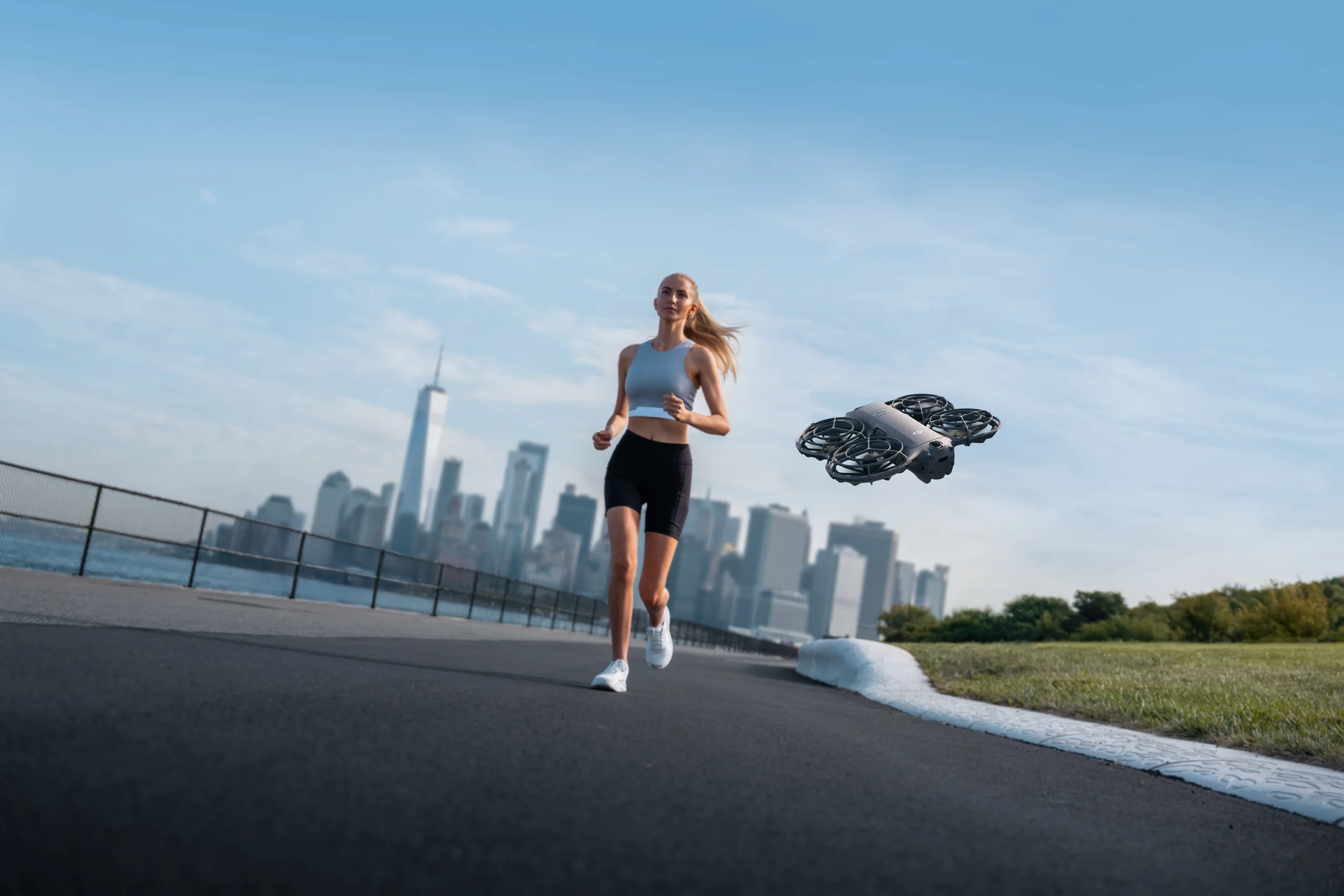
Tracking needs contrast, light, and a readable subject.
DJI’s published troubleshooting notes that poor or extremely bright light, rapid posture changes, similar-looking nearby subjects, and some fast-moving subjects can reduce tracking reliability. Treat those limits as reasons to simplify the shot—not prompts to push harder.
The target box drops.
Slow the subject, improve separation from the background, move to more even light, and restart from a stable composition.
The drone cuts a corner.
Stop. Widen the route or replace the aerial with an Action 6 body, handlebar, or static shot.
The subject outruns the shot.
Reduce speed and shorten the move. A clean five-second pass is more useful than a long unstable follow.
In Canada, the flight category still governs the shot.
Transport Canada requires visual line of sight in basic and advanced operations. Microdrones below 250 g have a lighter certificate and registration framework, but they are not exempt from reckless-operation, airspace, land-use, privacy, event, or local restrictions. Advertised events require specific permission regardless of drone size.
- Confirm exact ready-to-fly weight and flight category.
- Check the coordinates, airspace, aerodromes, notices, and authorization needs.
- Obtain property, venue, trail, facility, or event permission.
- Separate participants from uninvolved people and road traffic.
- Get participant releases and avoid recording bystanders unnecessarily.
Sources and verification.
This guide summarizes published manufacturer capabilities and Canadian aviation or privacy context, then adapts them into a practical production method. It does not reproduce the source articles and is not legal advice.
Verify before the take
- Current product compatibility, included items, firmware, and availability.
- Exact location, land or venue permission, people, privacy, weather, and operational rules.
- A recorded camera and sound test under the real conditions.