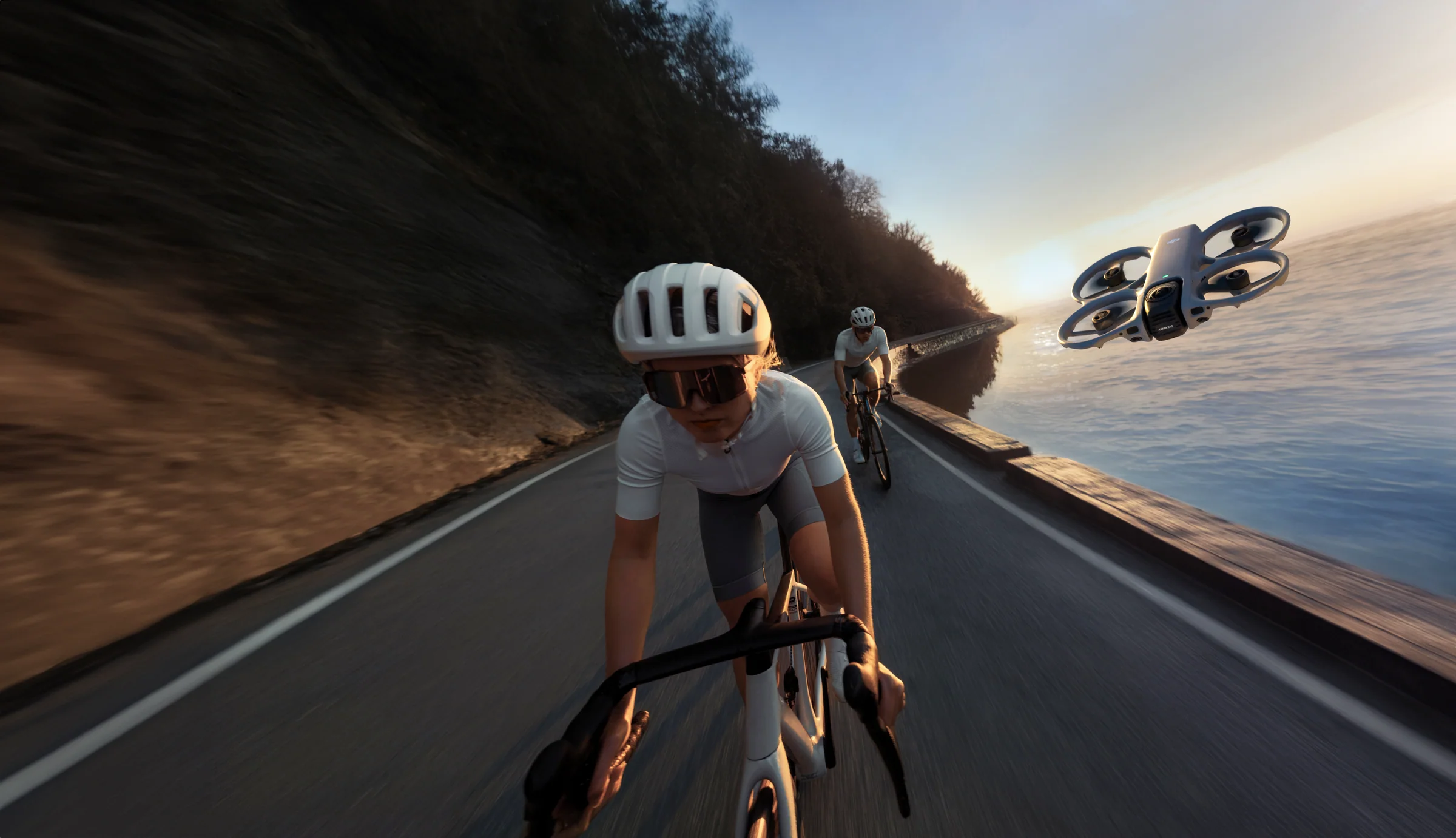
Six shots make the action legible.
- Wide geography: establish the course and direction.
- Static pass: let the subject cross a locked frame.
- Parallel track: match speed on a surveyed, separated route.
- POV: mount Action 6 where hands, wheels, or terrain provide context.
- Detail: tires, gloves, suspension, controls, breath, and preparation.
- Finish and sound: record the stop, reaction, mechanical ambience, and a short debrief.
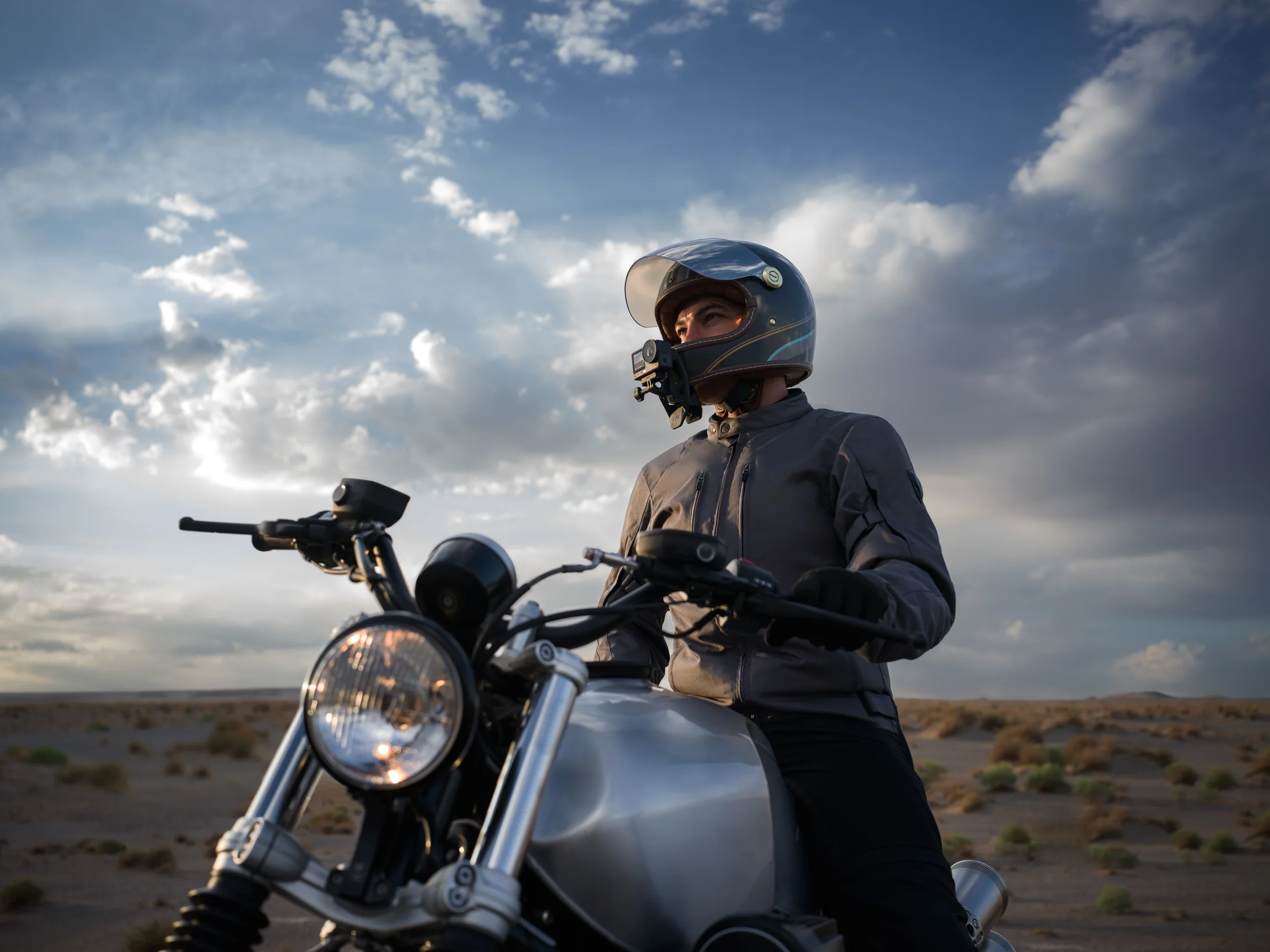
Give every person one safety job.
Use a pilot, a subject, and—when the route needs it—a visual observer or course spotter. The subject should never be expected to watch the aircraft while riding or driving. The operator should not pilot from a moving vehicle unless the applicable rules and operation have been specifically checked.
The subject changes the route.
Abort and reset. Do not let tracking automation improvise a new corridor.
A spectator enters the line.
Stop the subject and aircraft using the briefed signals; resume only after the route is controlled again.
Cut for direction before speed.
Keep screen direction consistent across passes, establish geography before close POV, and let sound bridge between aerial and ground angles. Use slow motion to reveal a moment—not to disguise a shot with no beginning or end.
- Label takes by route and direction.
- Sync the cleanest mechanical or ambient sound.
- Build a readable real-time cut first.
- Add slow motion only where the action benefits.
- End on reaction, result, or place—not a random battery cutoff.
Sources and verification.
This guide summarizes published manufacturer capabilities and Canadian aviation or privacy context, then adapts them into a practical production method. It does not reproduce the source articles and is not legal advice.
Verify before the take
- Current product compatibility, included items, firmware, and availability.
- Exact location, land or venue permission, people, privacy, weather, and operational rules.
- A recorded camera and sound test under the real conditions.