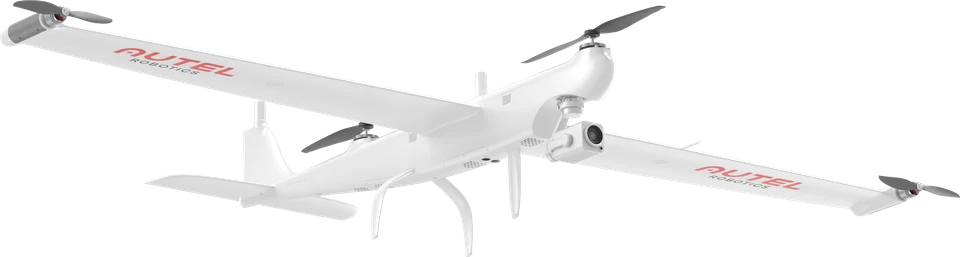
Autel Dragonfish vs DJI Matrice: compare the mission before the numbers
A long-endurance fixed-wing aircraft and an industrial multirotor can both carry cameras, yet solve different operational problems. A useful Dragonfish-versus-DJI comparison begins with the camera’s required movement: must it travel efficiently along a route, remain over one location or launch repeatedly from a fixed site?
This guide explains those choices using official product material checked October 16, 2026. It is mission-selection guidance, not a controlled flight test or a claim that one brand is best for every organization. SkyFlow is an Autel Authorized Dealer and can help scope a complete system.
Sustained coverage: evaluate Dragonfish
Dragonfish combines vertical takeoff and landing with fixed-wing cruise. That makes it a candidate for corridor observation, broad search patterns and sustained awareness over a larger operating area. It still requires transition space, appropriate routes, recovery planning and a crew prepared for the ground-system workflow.
The supplied newer series one-sheet lists Standard at up to 106 minutes and Pro at up to 179 minutes with DG-L20T. Those published figures help identify the intended endurance class; they are not promises of useful time over a target. Weather, payload, turns, reserve and transit all affect the job.
Dragonfish-25 is a larger aircraft decision again. Its supplied sheet lists up to 210 minutes with payload and a 10 kg maximum extra payload. A fleet considering it must assess aircraft mass, logistics and operating permissions rather than assuming it is simply a longer-flight version of a compact drone.
Stationary inspection: evaluate a multirotor
If the task calls for a stable view of a component, deliberate repositioning beside infrastructure or prolonged stationary observation, start by assessing a multirotor workflow. Autel Alpha and DJI Matrice 400 with a suitable payload belong in that discussion.
DJI publishes a 59-minute maximum flight time for Matrice 400 carrying H30T under its stated test conditions, and a separate 53-minute maximum hover time. These are different measures. Comparing either against Dragonfish’s fixed-wing endurance without explaining the mission would hide the very distinction a buyer needs to understand.
Payload selection also matters. Optical detail, thermal field of view, ranging, data handling and inspection deliverables should be evaluated as a complete workflow. Compare samples at the intended working distance where possible, and ask how the selected payload will be supported through the aircraft’s service life.
Portable response: consider the smaller field footprint
Not every mission justifies a larger aircraft and ground system. Teams moving rapidly between locations may find EVO Max or DJI Matrice 4 Series more practical starting points.
For that comparison, define what the team must see, how equipment will be carried and how quickly the complete crew can be ready. A model’s maximum flight time is less meaningful if deployment logistics prevent it reaching the right place at the right time. A shorter sortie can still deliver the needed information when the launch point is close to the task.
Do not infer that small size removes operating constraints. Airspace, people, weather, obstacles and the applicable operating category still need assessment.
Repeat remote dispatch: evaluate a dock system
A DJI Dock 4 and Matrice 5TD system addresses recurring dispatch from installed infrastructure. The procurement questions include site readiness, power, network, required ground equipment, software, battery workflow and remote operational responsibilities.
This is not the same purchase as a mobile VTOL field kit. A dock can improve the availability of an aircraft at a known site; a field crew can reposition equipment as the mission changes. Decide which operating pattern your organization needs before comparing the aircraft’s headline range.
Automated dispatch and long radio links do not establish permission to operate beyond visual line of sight. A deployment plan needs a separate Canadian regulatory assessment.
Use a shared mission brief for every proposal
Ask suppliers to work from the same route or area, sensor task, weather assumptions, reserve requirement, operating locations and frequency. Identify whether the camera must hover, track a route or respond to repeat alerts. Include data transfer, storage and reporting requirements.
Then compare the entire supply schedule: aircraft and camera, controller, communications, batteries and chargers, transport, software, training, maintenance and support. A Dragonfish starting price and a Matrice aircraft-only price do not describe comparable deliverables.
SkyFlow’s Dragonfish quotation options are configured around that brief. Pricing, availability and included equipment are confirmed in writing. The right outcome is a system that produces the required information within the organization’s operating constraints.
Sources and related guides
Configure a Dragonfish system with SkyFlow.
Share your route, camera requirements and deployment pattern. SkyFlow is an Autel Authorized Dealer; aircraft, payload, ground system, contents and availability are confirmed in your quotation.