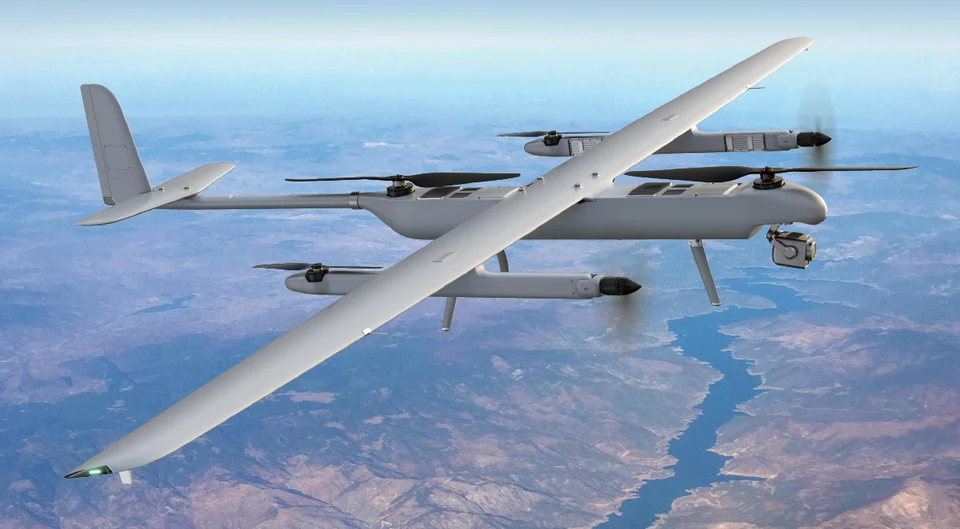
Autel Dragonfish in Canada: choose the aircraft, then the complete system
Autel Dragonfish is an electric tilt-rotor VTOL family: it departs and lands vertically, then uses fixed-wing cruise for sustained coverage. That combination is relevant to organizations observing long corridors, maintaining broad search patterns or following a developing scene. It also brings a different planning and logistics commitment from a folding multirotor.
SkyFlow is an Autel Authorized Dealer. Our Dragonfish series guide connects the aircraft comparison, official resources and quotation options. This article is a procurement guide based on manufacturer material checked October 16, 2026; it is not a SkyFlow flight-test report.
Standard, Pro and Dragonfish-25 are different system decisions
The newer series one-sheet supplied in Autel’s marketing package lists Standard at up to 106 minutes with DG-L20T and Pro at up to 179 minutes with DG-L20T. It lists maximum extra payloads of 1.3 kg and 1.77 kg respectively. Those figures belong to the stated versions and configuration. Older manuals and dealer listings can show different numbers.
Standard is the starting point for a smaller field system within this current comparison. Pro is the larger platform to evaluate when sustained observation justifies more transport and deployment commitment. Neither should be selected by endurance alone: your payload, recovery geometry, reserve policy and crew workflow determine the usable mission.
Dragonfish-25 is a separate larger aircraft, rather than a payload option for Standard. Its supplied one-sheet lists up to 210 minutes with payload and 10 kg maximum extra payload. The aircraft manual describes 29 kg excluding the gimbal. That mass changes the operating assessment; do not assume that a workflow or permission used with a smaller drone transfers unchanged.
Earlier Dragonfish Lite material is also present in the supplied package. The newer series one-sheet specifies Standard and Pro. For Lite fleet expansion, first verify current availability, support and configuration with SkyFlow instead of treating an older family rendering as proof of a current offer.
Specify the information you need to collect
A camera requirement should be expressed as a task: identify a feature at a working distance, inspect a temperature pattern, retain broad context or document a route. A large zoom number does not answer all four questions.
The supplied DG-L20T information lists 20× optical zoom, a wide-angle camera, native 640 × 512 thermal imaging and a laser rangefinder. The DG-T5 list adds two thermal focal lengths alongside 35× optical zoom; DG-T5L combines 35× optical zoom, thermal and laser fill light. Higher hybrid zoom values include digital magnification. Confirm exact aircraft compatibility, payload generation and regional configuration before choosing.
Ask which camera modes are required, how observations will be recorded and who will use the data. Do not infer that the Alpha L35T payload mounts on a Dragonfish because the names look similar. Compatibility needs a specific answer in the proposal.
Buy the ground workflow with the aircraft
The complete equipment schedule should identify the controller, compatible base station or tracking antenna, mounting, cables and power. It should also list battery sets, spares, charging equipment, transport cases and any software or service commitments.
For a mobile crew, think through how the equipment reaches the launch point, who assembles it and where batteries charge between sorties. For a repeat route, define how mission files are controlled and how the team handles changed terrain or obstacles. These are practical acceptance criteria, not accessories to consider after delivery.
A packing list from a different country or a different payload bundle does not establish what your order includes. Request quantities and exclusions in writing. Our quotation-only product pages deliberately do not promise that every pictured gimbal, antenna or case is supplied.
Keep mission capability separate from permission
VTOL removes a runway requirement; it does not remove the need for a suitable operating area. Fixed-wing transitions, turns, terrain, contingency routes and recovery space remain part of planning. Published endurance is not hover endurance, and published transmission distance is not a legally approved radius.
For Canada, assess the actual aircraft configuration and mission against Transport Canada’s operating categories. Check the current pilot, operator, declaration and authorization requirements that apply. SkyFlow does not claim that these pages establish a Dragonfish aircraft declaration or BVLOS approval.
Request an itemized proposal
Start with your area or route, desired sensor information, operating location, mission frequency and deployment timeline. Then compare complete proposals for Standard, Pro or Dragonfish-25.
Ask each proposal to identify the exact aircraft version and payload, ground equipment, battery inventory, charging, transport, software, training and support. SkyFlow confirms Canadian pricing and availability in writing. A foreign dealer’s advertised starting price is not a Canadian MSRP or the price of a complete field operation.
Sources and further reading
Configure a Dragonfish system with SkyFlow.
Share your route, camera requirements and deployment pattern. SkyFlow is an Autel Authorized Dealer; aircraft, payload, ground system, contents and availability are confirmed in your quotation.