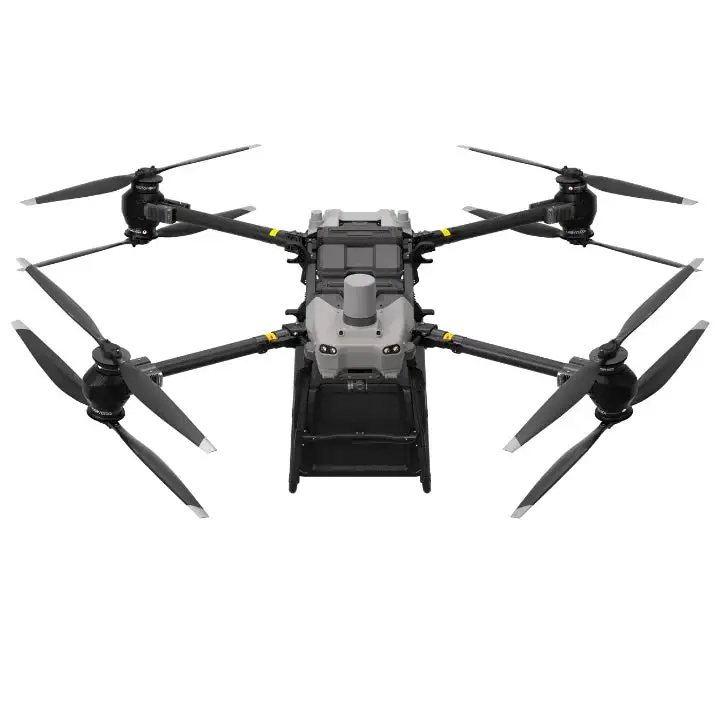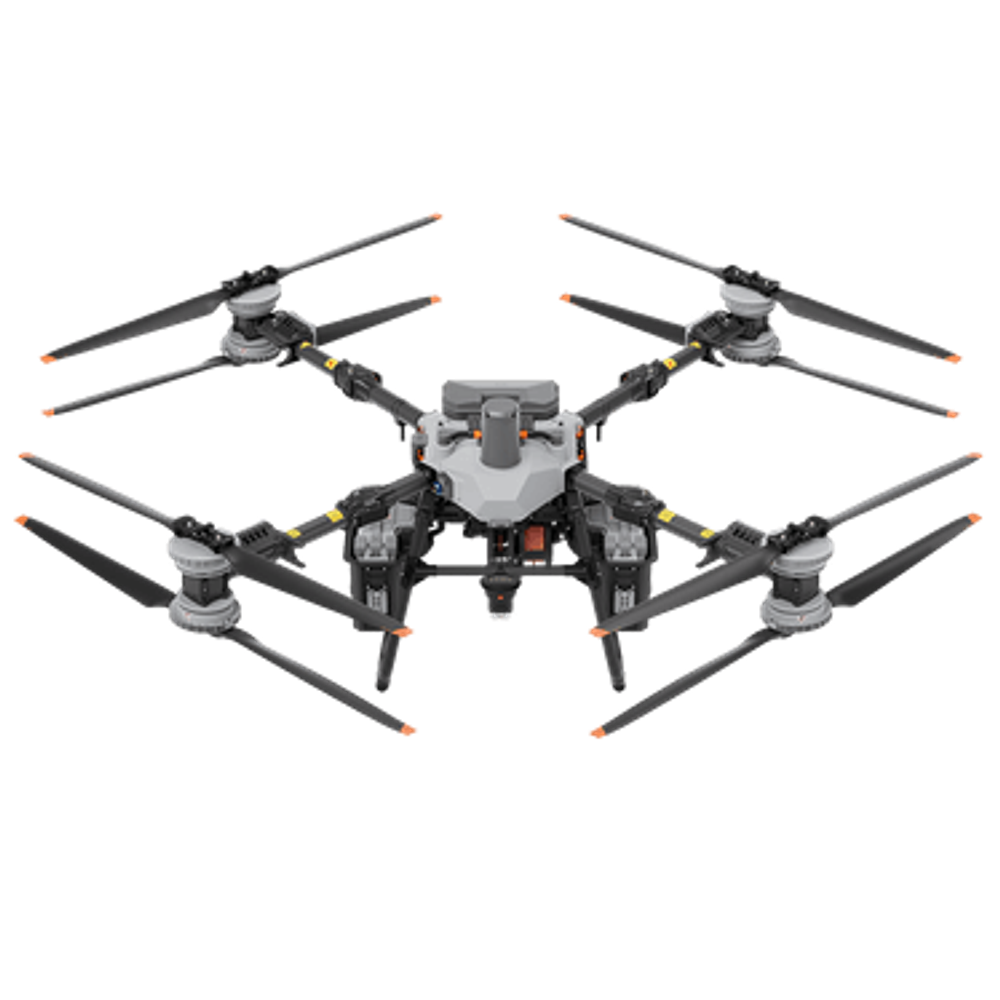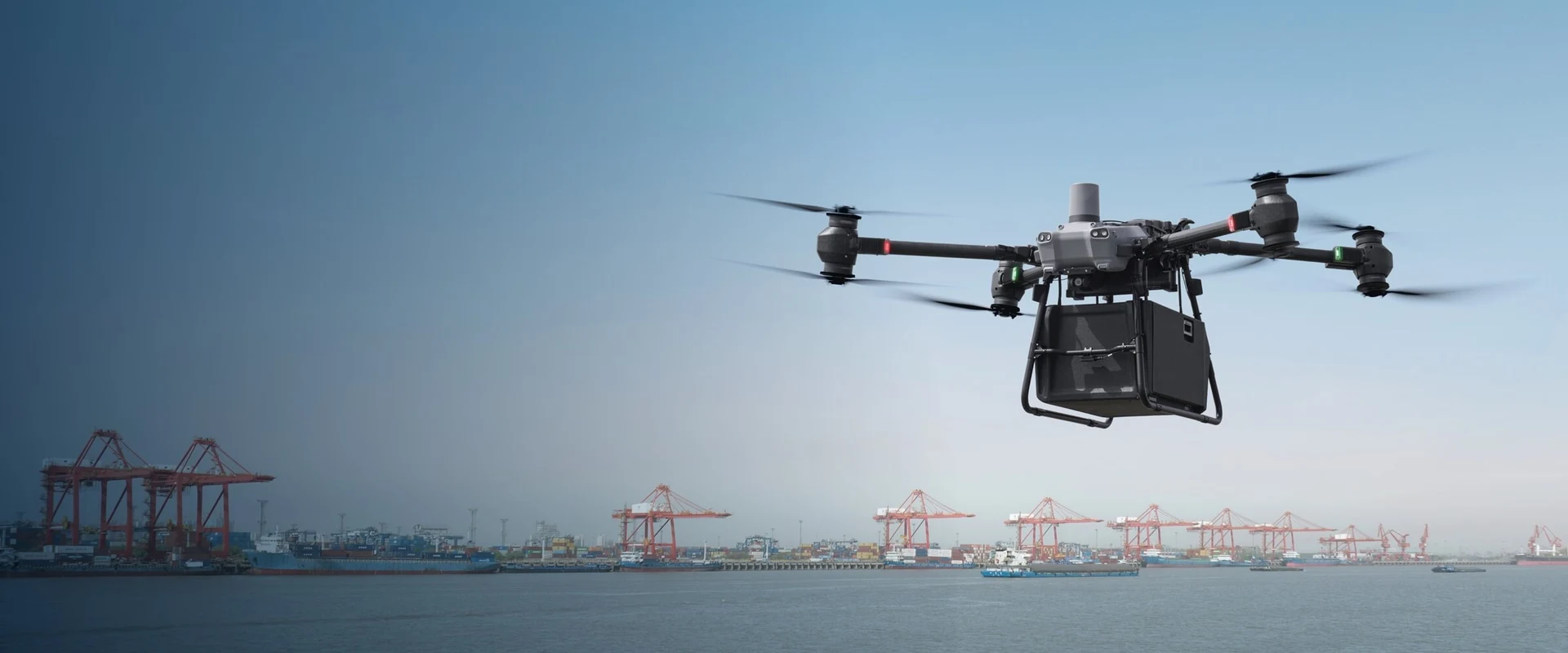
DJI FlyCart 100 vs FlyCart 30: which aircraft fits your work?
The DJI FlyCart 100 and FlyCart 30 can both support a commercial delivery operation, and both use the identical SkyFlow HoverWash 3 FC module and hose package. Choosing between them starts with the work: the load you must move, the route or facade you must reach, the ground equipment available and the cost of keeping a crew productive.
For an existing FC30 owner, a compatible washing kit can create another use for the aircraft. For a new heavy-lift operation, FC100 deserves a closer look when individual loads exceed the FC30 working envelope. The larger aircraft is not automatically the better washing purchase: the mount, water-filled hose, nozzle reaction and validated operating height still determine the setup.
This is a researched buying comparison, checked November 9, 2026, rather than a SkyFlow side-by-side flight test. Manufacturer figures below use different configurations and test conditions. Recommendations and worked examples are SkyFlow planning analysis; they are not measured production results.
View FC30 packages · View FC100 packages · Explore HoverWash 3 FC
The decision in one table
| Your starting point | Aircraft to investigate first | Why it deserves a quotation |
|---|---|---|
| You already operate an FC30 and want to add washing | FC30 + HoverWash 3 FC | Reuse the aircraft while specifying the washing installation and ground supply. |
| Your routine cargo fits the FC30 load envelope | FC30 | Compare the complete flight kit and cost per completed delivery before buying more lift capacity. |
| Individual loads exceed the FC30 envelope | FC100 | Assess a larger lifting system against the exact payload, route and operating permissions. |
| You need controlled lowering without landing | Either, with its correct winch | Compare cable travel, loading workflow and destination clearance. |
| You want a new facade-cleaning business | Compare both complete systems | Aircraft price alone omits the washing kit, pump, hose, water treatment and ground crew. |
| Charging power or vehicle space is limited | Compare the actual deployment plans | Electrical supply, battery rotation and transport can determine the workable system. |
Payload and performance: read the conditions with the number
| Manufacturer specification | FlyCart 30 | FlyCart 100 |
|---|---|---|
| Maximum dual-battery payload | 30 kg | 85 kg advertised; configuration caveat below |
| Maximum single-battery payload | 40 kg | 100 kg advertised; emergency-mode caveat below |
| Maximum takeoff weight | 95 kg at sea level | 170 kg performance specification; local restrictions apply |
| Published loaded flight distance | 16 km with 30 kg, dual battery | 12 km at 149.9 kg takeoff weight, dual battery |
| Published loaded hover endurance | 18 minutes with 30 kg, dual battery | 12 minutes at 149.9 kg takeoff weight, dual battery |
| Maximum horizontal speed | 20 m/s | 20 m/s |
| Aircraft protection | IP55 | IP55 |
| Aircraft operating temperature | −20°C to 45°C | −20°C to 40°C |
| Flight battery family | DB2000 | DB2160; current regional specifications also list DB2212 |
| Retracting winch cable | Optional 20 m system | Flagship system: 0–30 m |
| Maximum winch retraction speed | 0.8 m/s | 1.2 m/s |
Sources: DJI FC30 specifications, DJI FC100 specifications and DJI FC100 FAQ. Specifications and supported equipment can vary by region, firmware and configuration; confirm the Canadian order schedule.
DJI's FC100 FAQ advertises 85 kg with two batteries and 100 kg with one. Its lifting-system note includes the dual-battery compartment, accessories, lifting cable and hook in the quoted allowance. The usable customer load must follow the app's recommendation. The specification page describes single-battery mode as emergency use. Do not build a routine duty cycle around the single-battery headline. DJI FC100 FAQ, DJI FC100 specifications.
For quotation purposes, weigh the actual assembly: goods, sling or container, hook, mounting hardware and any other carried equipment. Ask the supplier to show what the quoted payload includes. A catalog figure without that accounting can produce the wrong aircraft choice.
Why 16 km versus 12 km does not establish a winner
FC30's loaded-distance figure uses 30 kg of cargo at sea level, without wind, at 15 m/s. Its unloaded dual-battery figure is 28 km. FC100's cited 12 km test uses a 149.9 kg takeoff weight, new batteries, sea-level conditions, 25°C and flight to zero charge at an optimal constant speed. These are different load cases, not a matched endurance trial. FC30 test conditions, FC100 test conditions.
Neither figure is a service radius. Build the mission around outbound travel, delivery or cleaning time, return travel, reserve, wind and a diversion plan. Then validate it at the proposed load and site.
For example, a two-kilometre outbound delivery also needs a return leg unless the aircraft lands and is recovered at the destination. A facade job can spend much of its battery budget hovering and repositioning rather than covering horizontal distance. Those missions need different acceptance tests even when the same aircraft flies them.
Cargo case, lifting system or winch?
FC30: its cargo mode uses a 70 L case; the optional winch provides weighing, swing control and touchdown release. This gives buyers a practical distinction between carrying enclosed goods and lowering a suspended load. DJI FlyCart 30 overview.
FC100: DJI identifies a Dual-Battery Lifting System and a Flagship Winch System. Its FAQ describes active electric-hook operation and explains that the current payload architecture uses these two systems rather than an equivalent cargo mode. DJI FC100 FAQ.
Choose the unloading method before pricing the aircraft. A location with a clear landing pad may favour a different workflow from a rooftop, elevated platform or steep slope. Confirm who attaches the goods, how the destination crew approaches, where the hook is placed and how a rejected delivery is recovered.
Cable length alone does not establish a suitable drop. Clearances, cable swing, snag points, ground access and the recovery procedure belong in the site plan. A washing hose is also a different system from a delivery winch cable; one cannot substitute for the other.
Batteries, chargers and controllers are separate ecosystems
| Item | FC30 purchase plan | FC100 purchase plan |
|---|---|---|
| Flight batteries | DB2000 inventory sized to the duty cycle | Confirm the supplied FC100 battery model and rotation stock |
| Charging equipment | C8000 and its specified supply | Confirm C12000 or other supported regional charging equipment |
| Controller | Correct FlyCart 30 RC Plus version | Correct FC100 controller and delivered software |
| Spares and service | FC30-specific charging leads and service parts | FC100-specific leads, accessories and service parts |
DJI explicitly says FC30 and FC100 batteries are not interchangeable, C8000 cannot charge DB2160, and the FC100 controller is not compatible with FC30. A shared DJI logo does not establish compatibility. DJI FC100 compatibility FAQ.
For FC30, DJI's FAQ lists C8000 output up to 2 × 3,600 W for two batteries or 5,700 W for one; its generator guidance calls for 220 V single-phase output rated at least 8 kW. Confirm the installation and regional equipment supplied. DJI FC30 battery and charger FAQ.
For FC100, the C12000 specification distinguishes 12,000 W at three-phase 380 V from 3,000 W at single-phase 220 V. Its nine-minute figure covers 30–95% charging under stated temperature and supply conditions, not an empty-to-full cycle on an ordinary outlet. DJI FC100 charging specifications.
Before ordering, give the supplier the actual available voltage, phase and electrical capacity. Include the pressure washer or other jobsite loads in the power plan. A flight battery rotation that works beside a workshop supply may behave very differently from one supported by a mobile generator.
FC30 and FC100 for HoverWash 3 FC
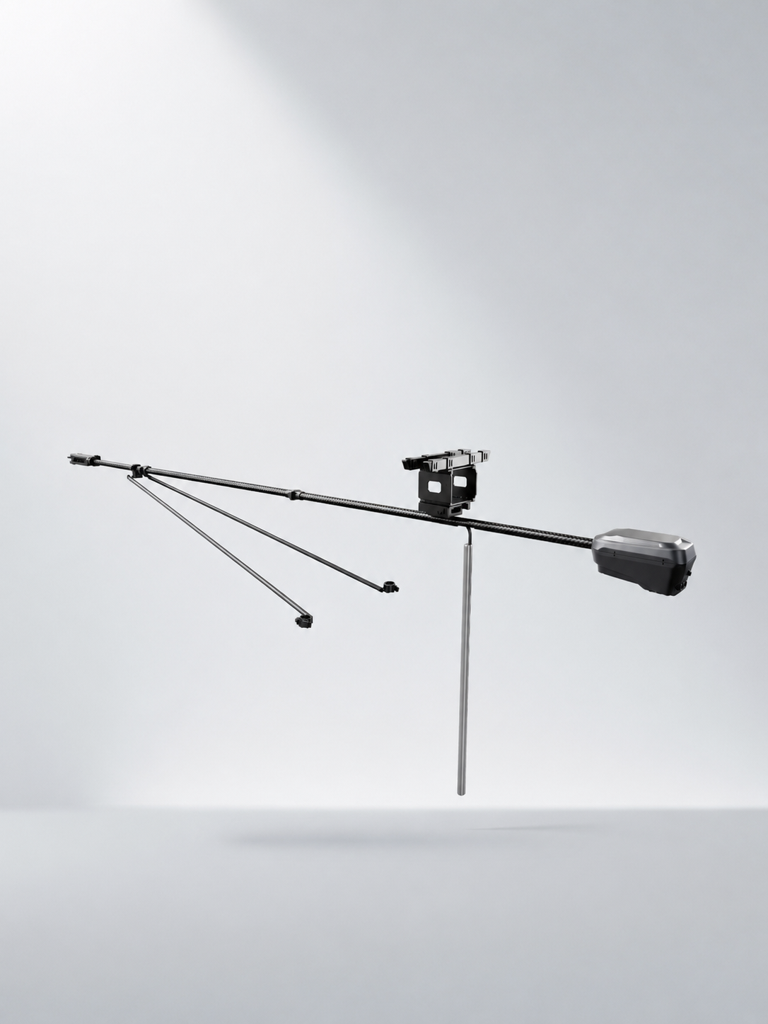
SkyFlow confirms one identical HoverWash 3 FC module and the same hose package for FC30 and FC100. The 3 FC wand-and-hose kit is separate from the aircraft and ground pump. The catalog configuration has a CAD $10,300 MSRP and includes a 200 ft light high-pressure hose with a 6 mm bore.
Choose FC30 for stable washing operation and cost-effective ownership, whether you are buying your first washing aircraft or expanding an existing fleet. Choose FC100 when greater lifting capacity and a combined washing-and-cargo workload justify the larger platform. The washing module and hose package are the same on both.
The useful comparison is the complete wash circuit:
- Aircraft and mount: identify the exact adapter, controls, wand and all suspended equipment.
- Water-filled hose: account for the section carried in the air, its route, fittings and support arrangements.
- Nozzle and surface: choose pressure, flow, spray pattern and standoff for the material being cleaned.
- Ground supply: match the pump, filters, water storage, chemical system and power source.
- Glass finish: specify rinse-water quality and test the result on the actual surface.
- Crew workflow: plan hose handling, aircraft movement, exclusion areas and transitions between wash passes.
The same wand compatibility does not establish equal usable height, pump requirements or cleaning productivity. SkyFlow's FC100 ground-pump planning range must not be copied onto FC30 as an aircraft rating. Have the complete FC30 circuit specified for the site.
Start with the HoverWash aircraft comparison, 3 FC system guide, complete kit roadmap and pump guide.
What does a complete package cost in Canada?
These are SkyFlow's listed CAD equipment prices checked November 9, 2026. Confirm current prices and exact contents on the purchase page; taxes, delivery, training and site-specific equipment depend on the quotation.
| FC30 package | Listed CAD price | Main operating additions |
|---|---|---|
| Standard Aircraft Kit | $22,895 | Aircraft kit; flight batteries and charger separate |
| Single-Battery Cargo | $27,713 | 1 × DB2000 + C8000 |
| Dual-Battery Cargo | $30,832 | 2 × DB2000 + C8000 |
| Dual-Battery Winch | $35,676 | 2 × DB2000 + C8000 + winch |
| Field Rotation Winch | $41,914 | 4 × DB2000 + C8000 + winch |
| Dual-Operator Winch | $43,793 | 4 × DB2000 + C8000 + winch + 2 RC Plus |
Source: current SkyFlow FC30 package selector.
Adding the listed $10,300 HoverWash 3 FC kit to the $30,832 FC30 Dual-Battery Cargo package gives a $41,132 equipment subtotal. This is arithmetic using two listings, not a complete washing-system quotation. It excludes the ground wash supply and any additional installation equipment not expressly included. A delivery winch is not automatically required for washing.
The FC100 catalog currently lists the following configurations. These are different bills of materials from the FC30 packages above.
| FC100 package | Listed CAD price | Important contents distinction |
|---|---|---|
| Drone Airframe Only | $16,617 | Flight batteries and charger excluded |
| Dual Controller Combo, Airframe Only | $18,691 | Two controllers; flight batteries and charger excluded |
| Operation Standard Combo | $25,710 | Dual controllers, parachute and standard lifting system; batteries and charger excluded |
| Comprehensive Operation Winch Combo | $33,530 | Dual controllers, parachute and lifting winch; batteries and charger excluded |
| Field Ready All-In-One | $68,080 | Comprehensive winch configuration plus six batteries, two chargers and two heatsinks |
Source: SkyFlow FC100 variants and included-component defaults, checked November 9, 2026. The low airframe starting price should not be read as a ready-to-fly system price. Compare selected contents, not the model number or starting price alone.
For FC100, compare the currently selected aircraft package with a written bill of materials. Do not compare an FC30 battery-and-charger package against an FC100 airframe-only price. Ask for the same battery rotation, operator arrangement, delivery hardware and washing equipment in each quotation.
Compare the cost per completed job
A larger payload can reduce delivery cycles when a job is limited by load per trip. It cannot remove a loading bottleneck, an undersized generator or a destination crew that is not ready.
As an illustrative calculation, a 240 kg consignment split into 30 kg units needs eight loaded departures. If a validated configuration could carry 60 kg per departure, the same material would need four. This assumes suitable packaging and loading permission; it says nothing about flight time, reserves, weather or actual throughput.
For washing, compare the cost per accepted square metre after rework, setup and water use. Time the whole job: unloading, hose deployment, preparation, active washing, battery changes, repositioning and pack-down. A faster nozzle pass does not necessarily produce a shorter crew day.
Ask each quotation to include capital equipment, expected consumables, battery replacement allowance, transport, staffing, training and service support. Use a short site trial to test the assumptions before committing to a broad productivity claim.
Safety features and Canadian operating requirements
DJI describes FC100's LiDAR, penta-vision and millimetre-wave radar as its newer sensing architecture. FC30 uses active phased-array radar and binocular vision. Sensing aids still require an aircraft-specific operating procedure. FC100 overview, FC30 overview.
In Canada, Transport Canada classifies aircraft over 25 kg through 150 kg as medium drones, and those above 150 kg as large drones. Operating weight includes carried or attached equipment. Operations above 150 kg require an SFOC-RPAS; the mission may have other approval requirements as well. Transport Canada categories, special-operation permissions.
This makes actual configured weight a purchase consideration, particularly for FC100. Establish the intended operating category, aircraft declaration status, pilot qualifications, airspace and site permissions before finalizing a deployment. A manufacturer's performance ceiling is not Canadian operating authorization, and a long radio link does not itself authorize BVLOS flight.
Questions buyers ask
Is FC100 always better than FC30?
It is the larger lifting platform, but the better purchase is the one that completes your validated job with an affordable crew, ground setup and support plan. Existing FC30 ownership can materially change the calculation.
Does HoverWash 3 FC work with FC30?
Yes. FC30 and FC100 use the identical HoverWash 3 FC module and the same hose package. Neither aircraft is automatically included in the wand kit.
Can I reuse FC30 flight batteries, charger and controller on FC100?
Do not budget on that basis. DJI's compatibility FAQ rules out the FC30 battery interchange, C8000 charging of DB2160 and FC100-controller compatibility with FC30. Obtain an itemized upgrade quotation.
Is 200 ft of hose a guaranteed 200 ft washing height?
No. Usable height depends on the installation, suspended load, pressure losses, hose route and site conditions. Request a defined working envelope for the complete washing system.
What should I send SkyFlow for a useful comparison?
Send the heaviest individual load or the facade dimensions; route length or intended working height; site photographs; elevation and access constraints; available electrical supply; water source; existing equipment; expected weekly workload; and required delivery or cleaning result.
Compare FC30 packages, compare FC100 packages, or request a matched system quotation. For washing, include the HoverWash 3 FC kit in the same conversation.
What do you need next?
Two quick paths: book spraying/scouting services, or explore ownership/financing options for drones and parts.
Get drone spraying, precision scouting, and variable-rate applications across Ontario. Fast scheduling and pro operation.
Browse drones, parts, and accessories. If you want a demo or need help choosing, we’ll guide you to the right setup.