A Guide With Pro Tips To Cover 14 Acres in Under 20 Minutes: Drone Frost Seeding a Hilly West Elgin Pasture with the DJI Agras T50
March 28, 2026 — West Elgin, Ontario
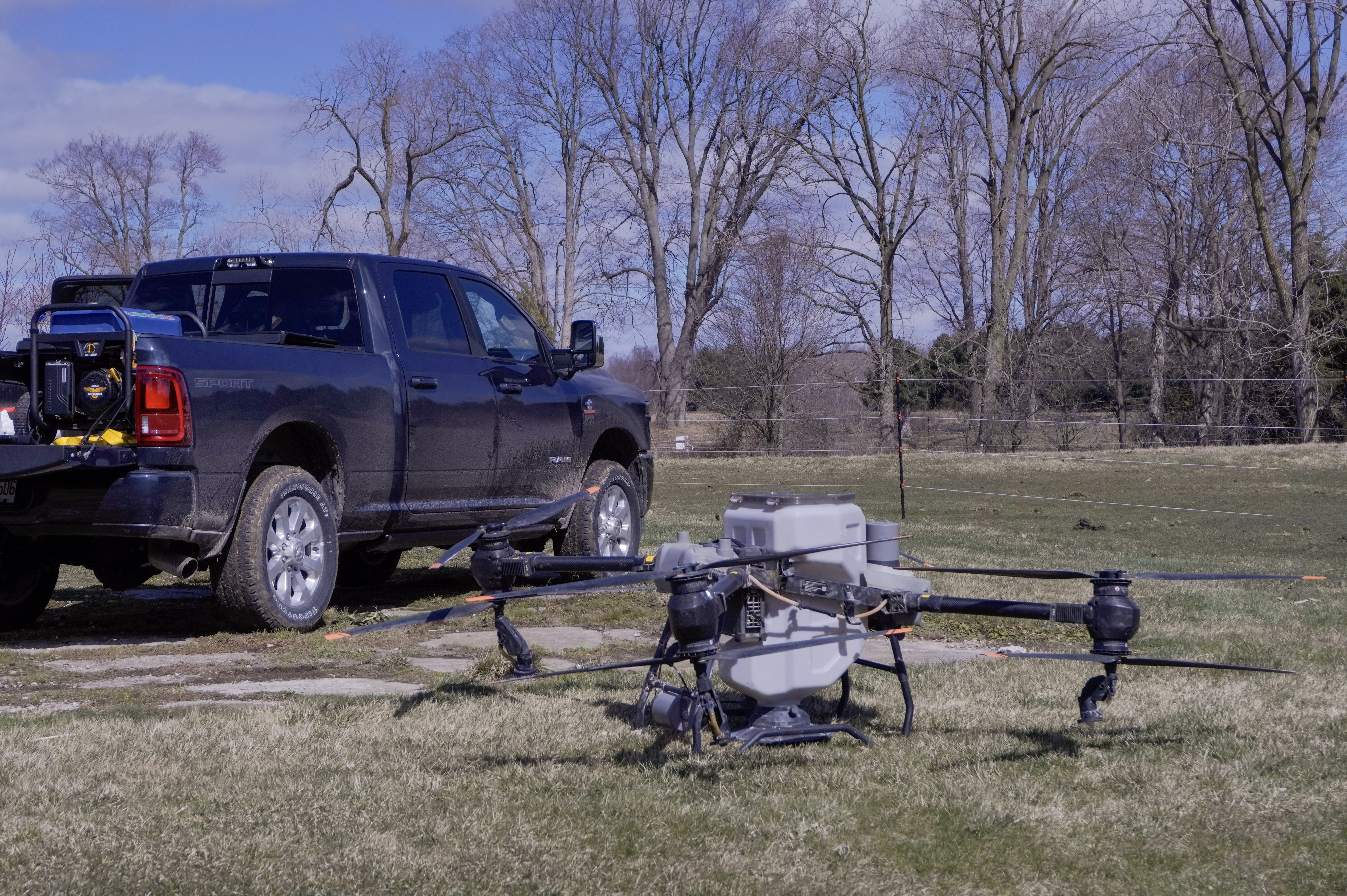
On March 28, we took on a 14-acre pasture frost seeding job in West Elgin, Ontario — and had the entire application wrapped up in under 20 minutes of flight time. That kind of efficiency is hard to wrap your head around until you see it, so we wanted to break down the job, the challenges, the equipment, and the techniques we used so other operators and landowners can learn from it.
Why Frost Seeding Matters for Pasture Owners
Late March is the sweet spot for frost seeding in southern Ontario. The freeze-thaw cycles work the seed into the soil naturally — no tillage required. For pasture owners, this is one of the most cost-effective ways to thicken up a tired stand, introduce legumes like clover, and improve overall forage quality heading into grazing season.
But here's the thing: the window is narrow. You need the ground to still be experiencing overnight freezes, and you need to get the seed down before the spring growth takes off. Waiting too long means the existing grass canopy will shade out the new seedlings. Acting too early means the seed sits exposed on frozen ground with no soil contact. The timing on this job was just right.
The Challenge: Why Traditional Methods Struggle Here
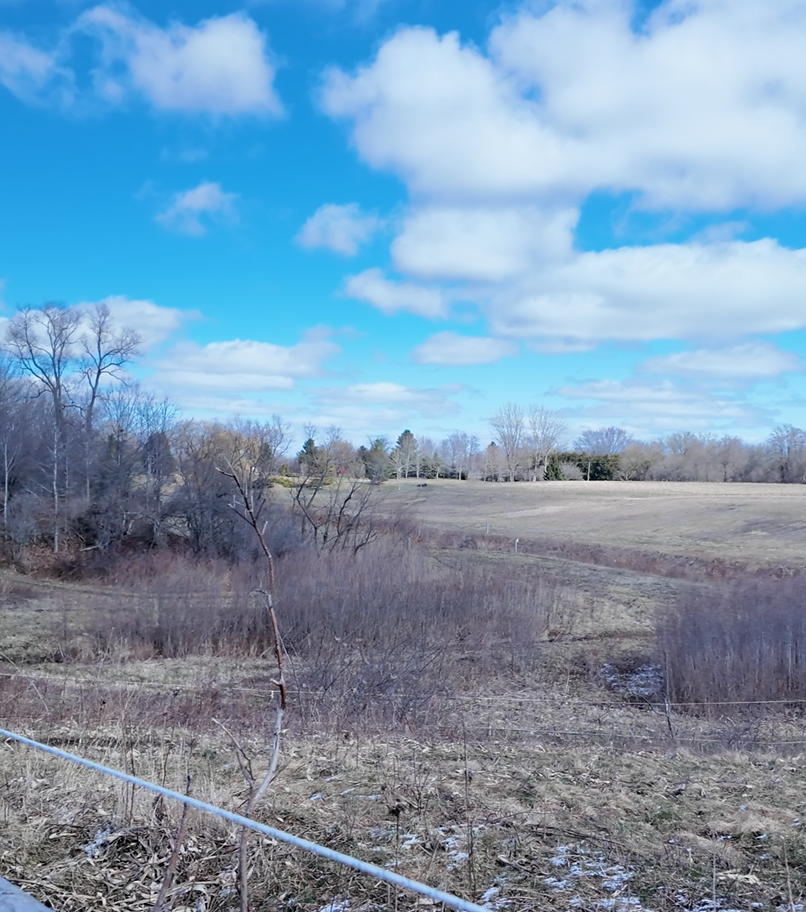
This was not a simple flat field. The site presented a long list of headaches for conventional ground spreading equipment:
- Hilly, undulating terrain — steep enough in places that a ground spreader would struggle to maintain consistent speed and application rate.
- Partially saturated ground — late March means snowmelt. Sections of the pasture were visibly wet and soft. A ground rig would have sunk in, left ruts, and potentially gotten stuck entirely.
- Extensive fencing — this is a working horse farm with paddock divisions everywhere. Wire fencing criss-crosses the site, creating narrow corridors that a tractor-drawn spreader simply cannot navigate efficiently.
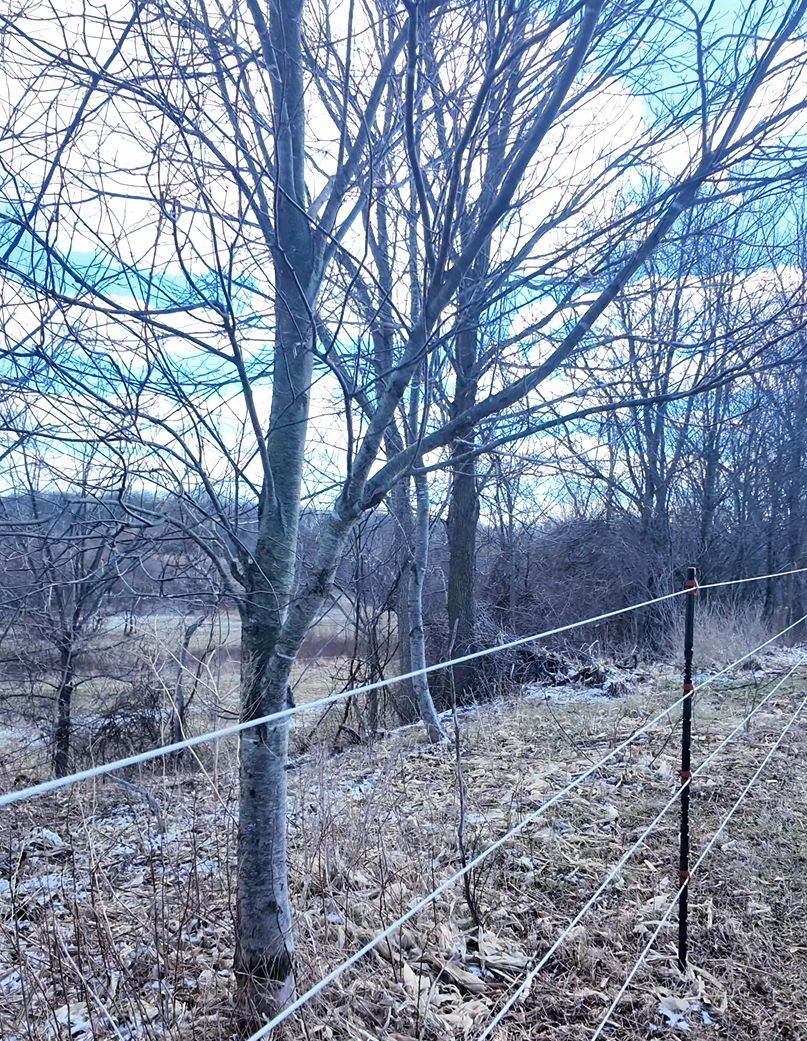
- Trees and brush throughout the application area — not just at the edges, but jutting into the middle of the fields. A ground unit would have to constantly stop, back up, and reroute.
- Soil compaction risk — driving heavy equipment across wet, thawing pasture compacts the soil right when you want it loose and open for seed-to-soil contact.
- Time and labour cost — manually spreading 14 acres of hilly, fenced, obstacle-laden pasture with a walk-behind or ATV spreader? You're looking at a full day of exhausting work.
With a drone, every one of these problems disappears. We flew over the fences, skipped the mud, cleared the hills, and finished before most people would have the ground spreader hitched up.
The Equipment: DJI Agras T50 with Spreader
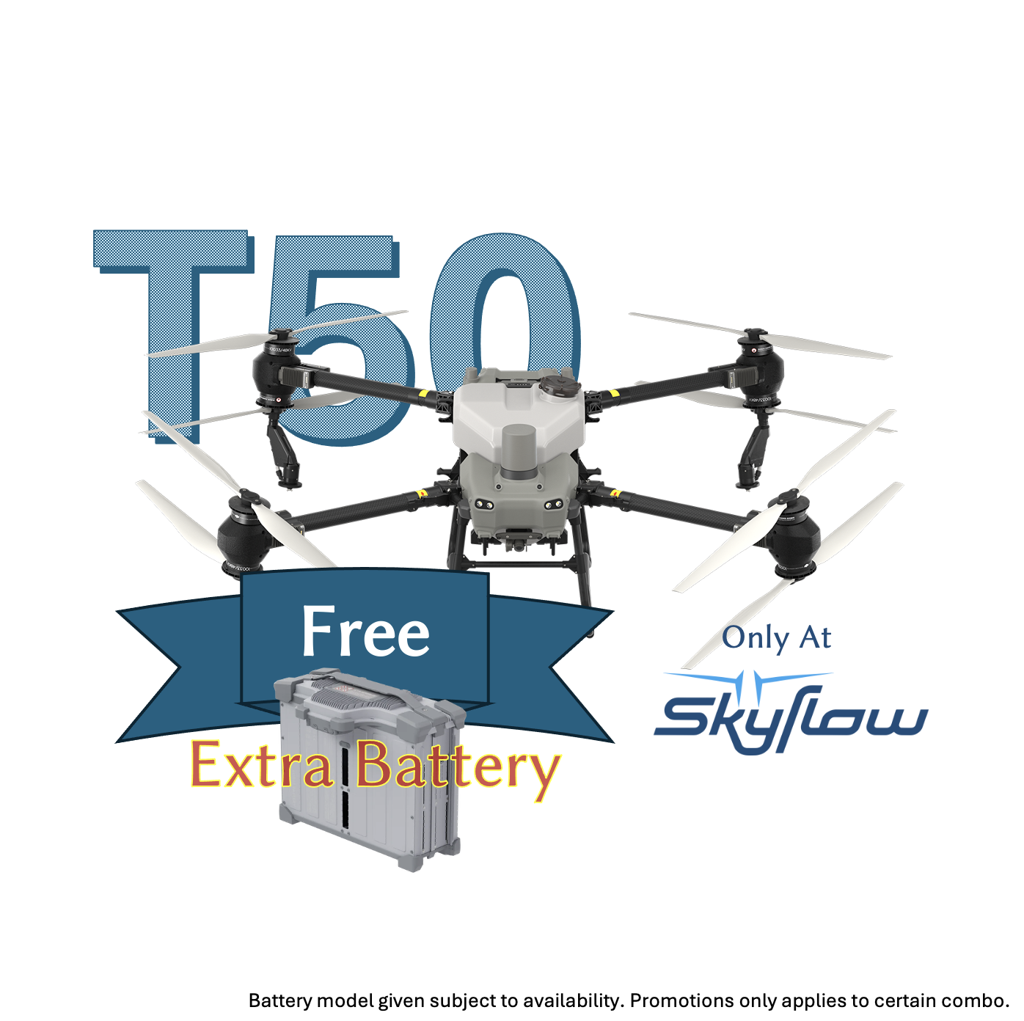
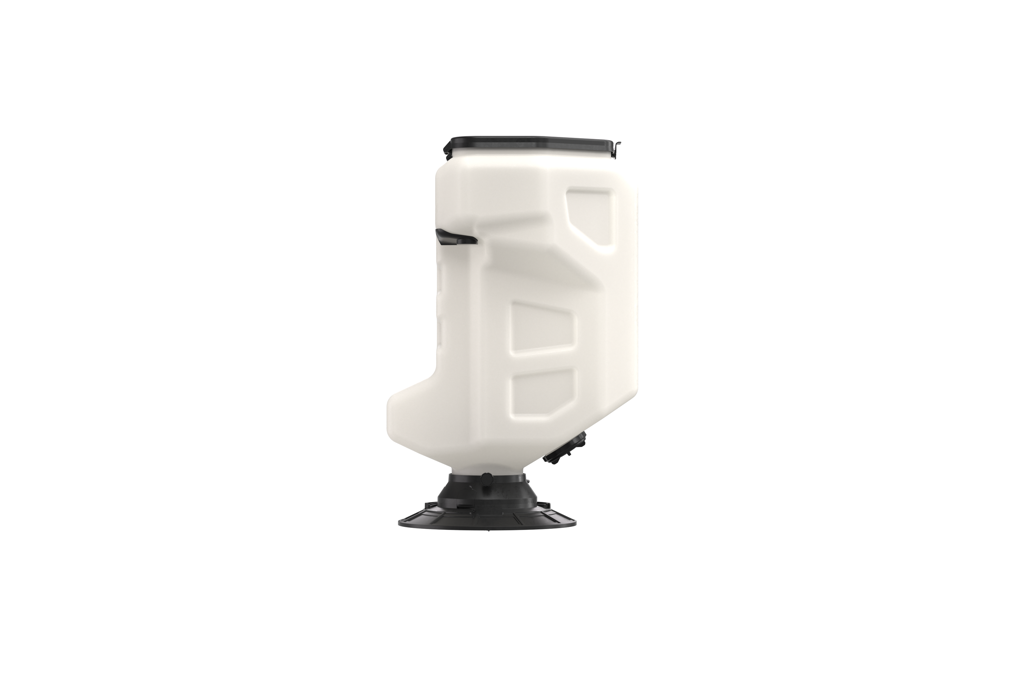
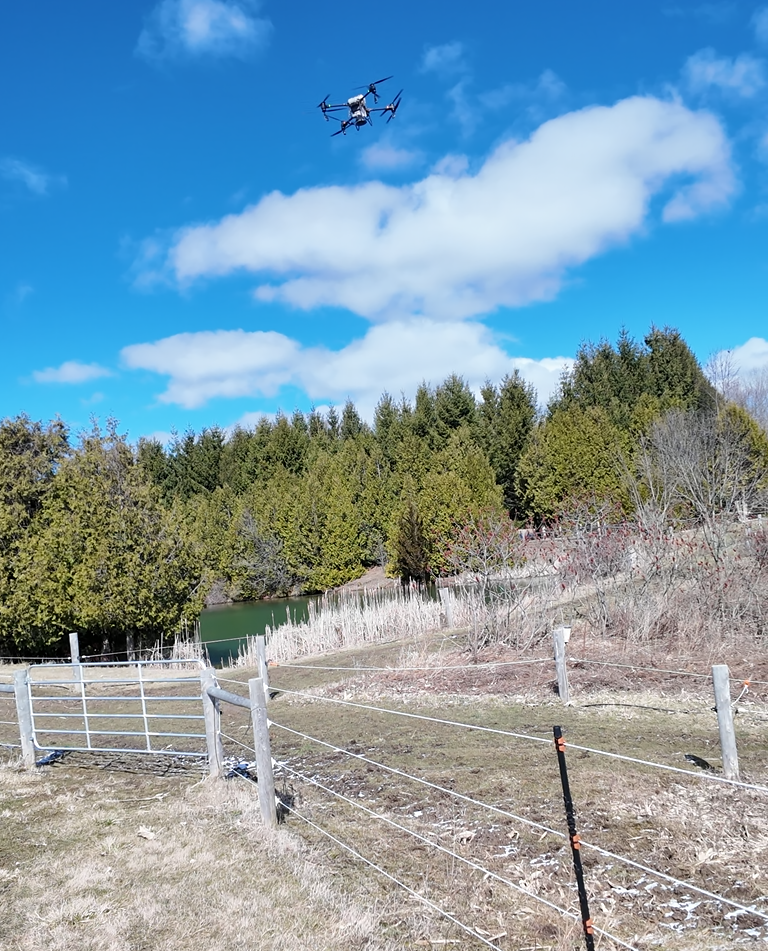
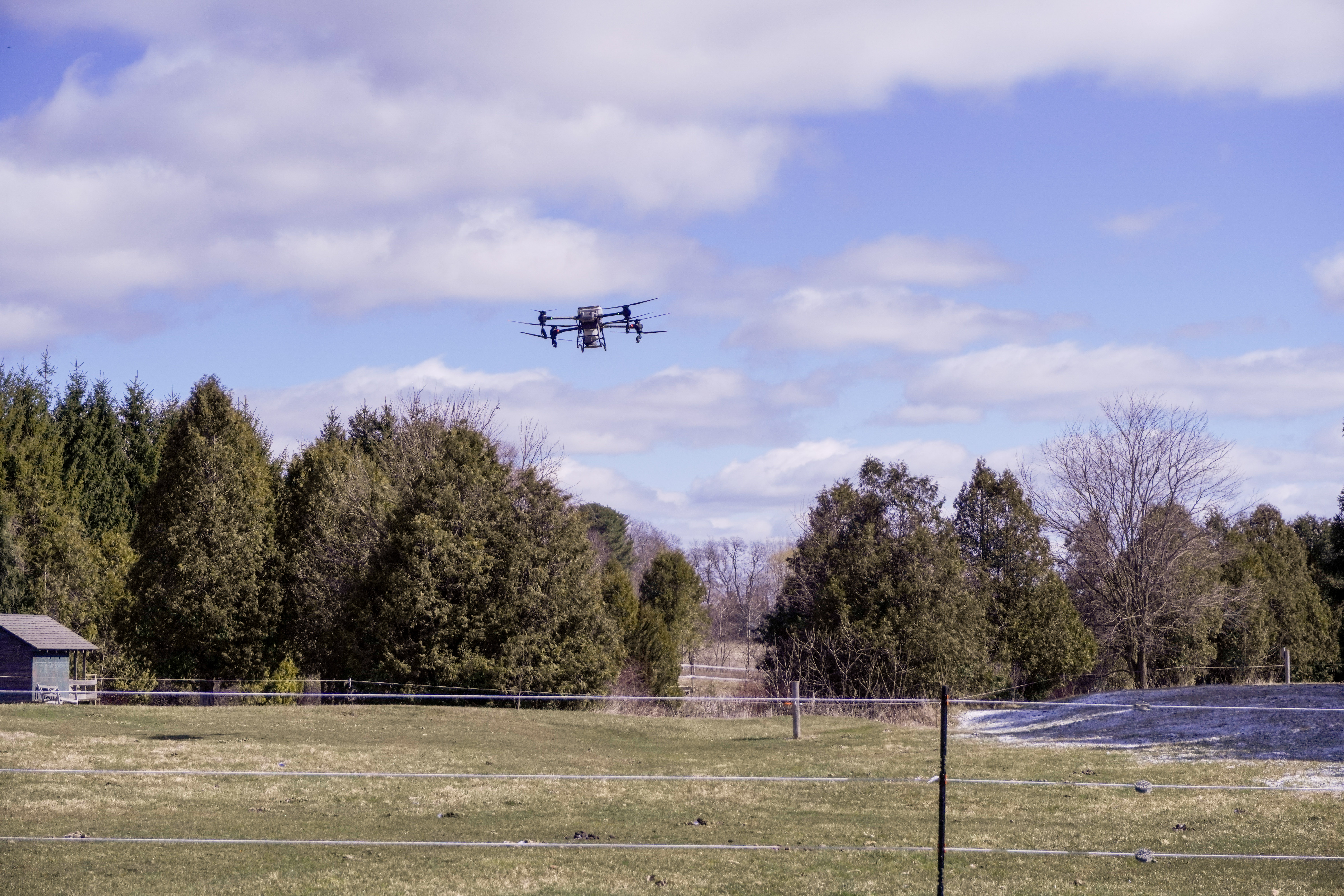
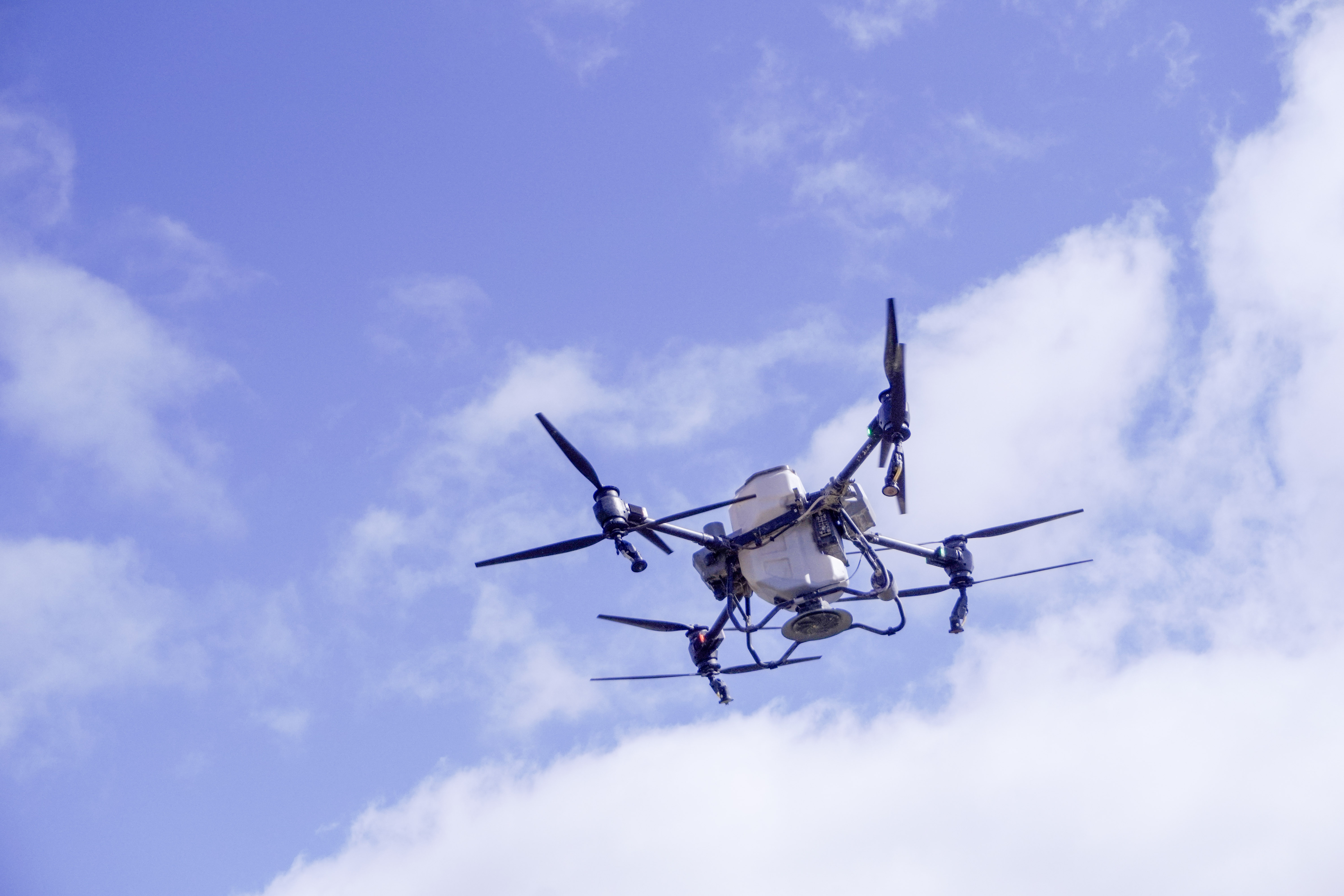
For this job, we used the DJI Agras T50 equipped with the spreading system. Here's a quick rundown of what makes this drone the right tool for pasture seeding:
- Payload capacity: Up to 50 kg for spreading operations — enough to cover significant acreage per sortie.
- Coaxial twin-rotor design: Eight propellers on four arms deliver exceptional stability, even in the gusty March winds we dealt with.
- Front and rear Active Phased Array Radar: Millimetre-wave radar for obstacle detection and terrain following.
- Binocular vision system: Provides additional obstacle sensing to complement the radar.
- 75-litre spreading hopper: Large capacity means fewer refill stops.
- Spreading rate up to 1,500 kg/hour: The spiral channel spinning disk delivers consistent, even distribution.
- RTK positioning: Centimetre-level accuracy for precise, overlap-free flight lines.
- 9-minute fast charging with the D12000iEP generator — minimal downtime between batteries.
The result? We covered 14 acres in under 20 minutes of actual flight time. That includes all the corridor work, the turns around obstacles, and flying multiple small irregular zones. From truck to airborne to seed-on-ground to packed up — the entire operation was remarkably fast.
Site Briefing: Narrow Corridors and Tree-Dense Terrain
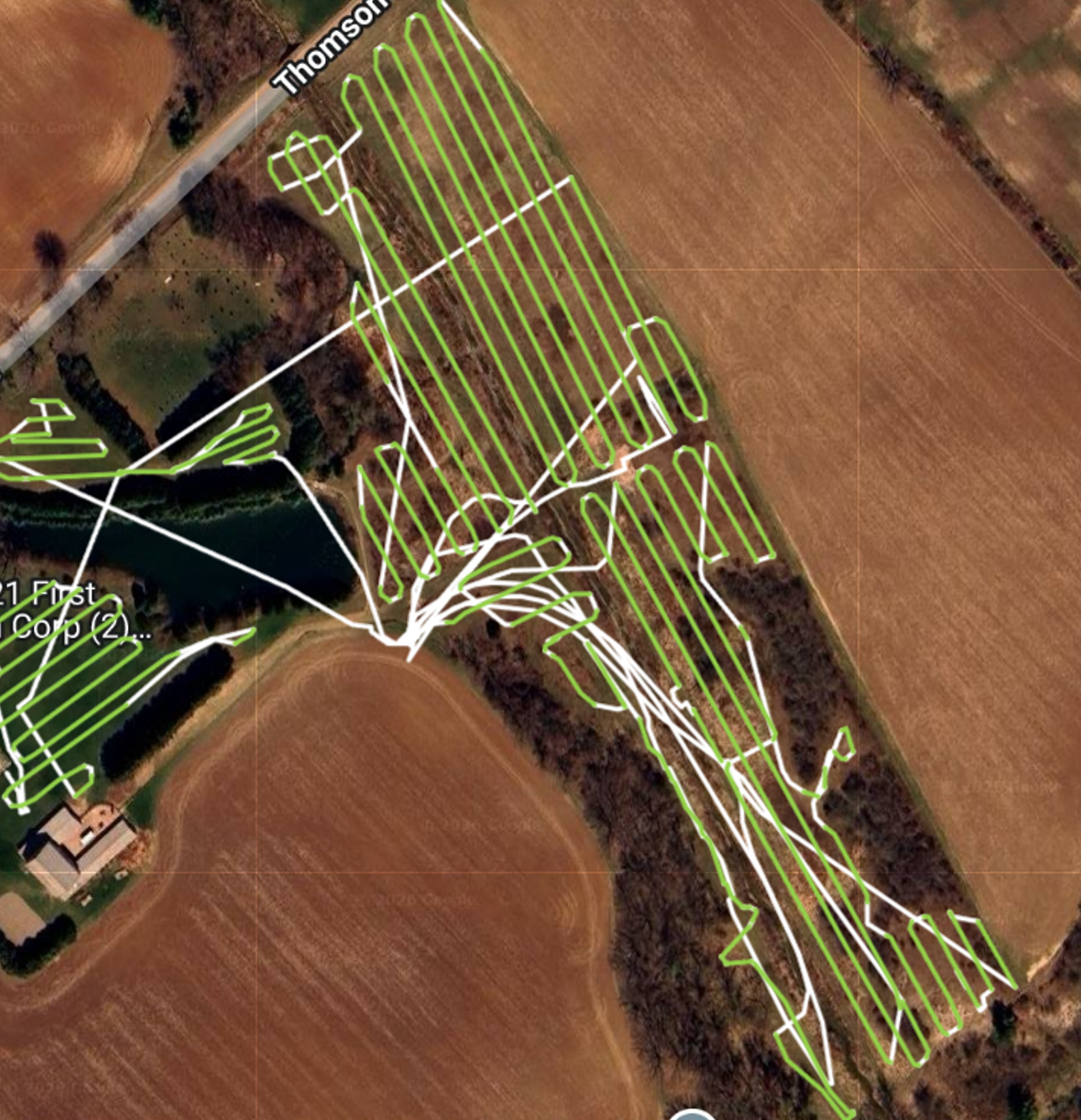
This particular site was broken up into multiple narrow corridors divided by fence lines and dense treelines. On the satellite view, you can see the irregular, fragmented shape of the application zones — nothing like the wide-open rectangles that make drone work easy.
Because this job took place in early spring, the deciduous trees had not yet leafed out. That sounds like it should make things easier — and in terms of canopy clearance, it does. But it introduces a serious radar challenge: bare branches are extremely difficult for millimetre-wave radar to detect. The thin, irregular profiles of leafless branches don't return a strong radar signal, meaning the T50's phased array radar can miss them.
This is an important distinction from a drone like the DJI Agras T100, which is equipped with LiDAR-based obstacle avoidance capable of detecting fine obstacles like power lines and branches. The T50, T20, T25P, and T70 all rely on millimetre-wave radar, and operators need to account for this limitation when working around bare trees.
Our rule for this job: reduce flight speed to under 15 ft/s any time we were operating near trees. This gives you more reaction time and allows the binocular vision system to contribute more effectively to obstacle detection. Safety first — always.
Work Parameters and Technique
Getting good seed distribution on a job like this requires adjusting your parameters to the conditions. Here's what we dialled in:
Standard corridor passes (good clearance, away from trees): - Flight altitude: 9–11 ft above ground level - Spinner disk RPM: 1,000 RPM - Flight speed: 40–50 ft/s - This combination maximizes swath width, overlap, and evenness of distribution. When the air is calm and the corridor is wide, you want to fly lower and spin faster for the best ground coverage.
Near trees and narrow corridors: - Spinner disk RPM: 800 RPM to reduce the swath and keep seed within the intended zone - Flight speed: 10–20 ft/s. Slower speed helps the seed use the downwash and reach the ground accurately - Flight altitude: 15–20 ft fly over the trees.
In windy conditions (5–6 m/s): - Reduce flight speed even when at altitude. Wind carries seed particles laterally, and if you're flying fast at height, the seed can drift well outside your intended application area. Slowing down improves placement accuracy.
Pro Tips from the Field
Here are some techniques we've refined over many jobs like this one:
1. Manual altitude adjustments during automated routes. The T50 supports gentle manual altitude overrides even while running automated flight paths. When you see a tree or tall bush coming up on your flight line, you can smoothly lift the drone to clear it without aborting the route. This is a game-changer on sites like this where obstacles pop up in the middle of otherwise clear corridors.
2. You don't have to squeeze through every gap. When a narrow corridor has branches encroaching from both sides, don't force the drone through at application altitude. Instead, climb above the treetops, reduce your flight speed, and lower the spinner RPM. The seed is large and heavy enough that it will still fall into the corridor below — unlike liquid spray, seed particles don't atomize or evaporate, so you maintain reasonable accuracy even from higher altitude. This is not recommended for liquid spraying, where droplet drift would be excessive, but for seed spreading it's a practical and safe technique.
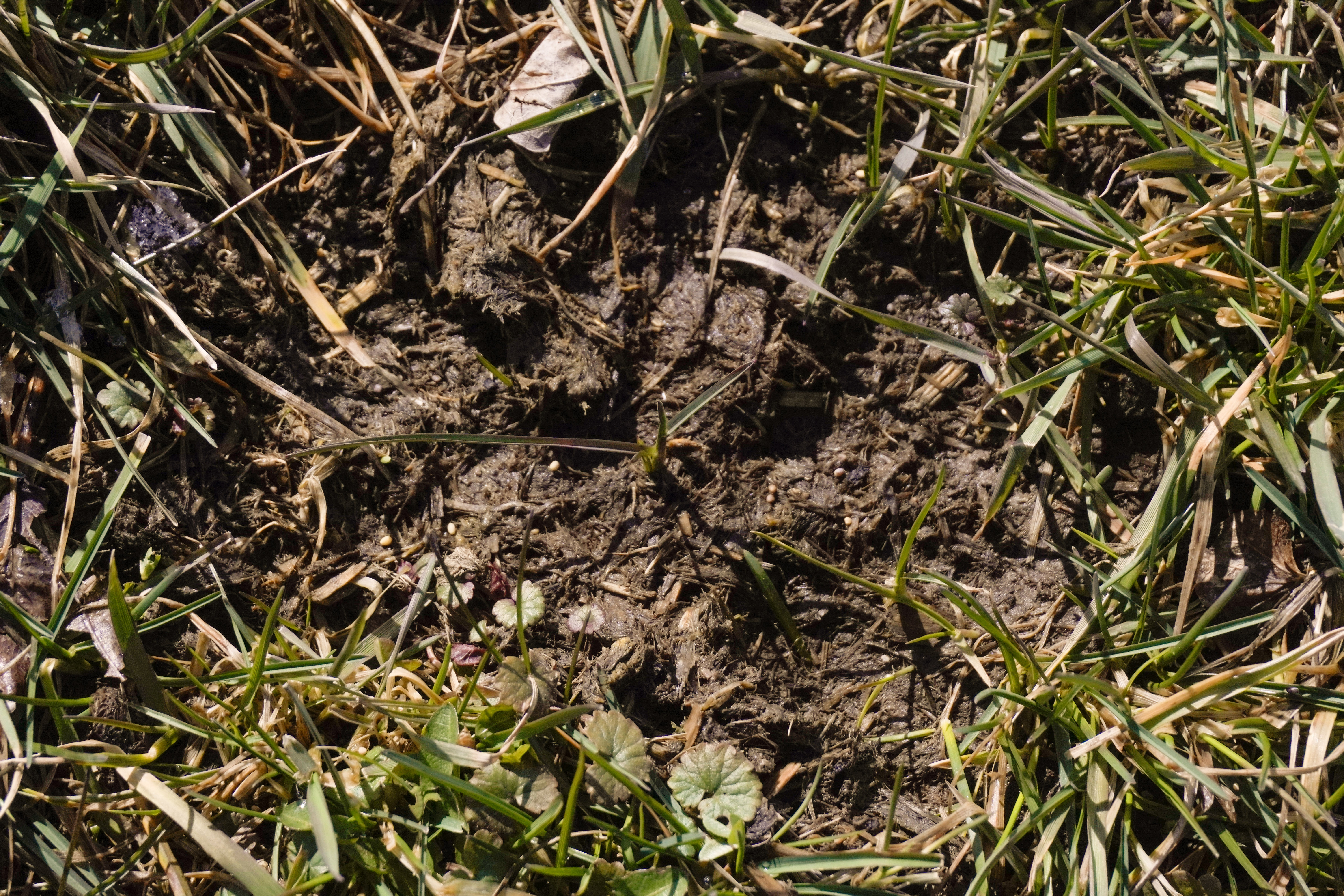
3. Always do a ground check. After your first pass, walk out and look at the ground. Confirm that the seed is landing where you expect it, at the density you're targeting. Adjust your parameters accordingly before committing to the full job.
Aerial Survey with the DJI Mavic 3M
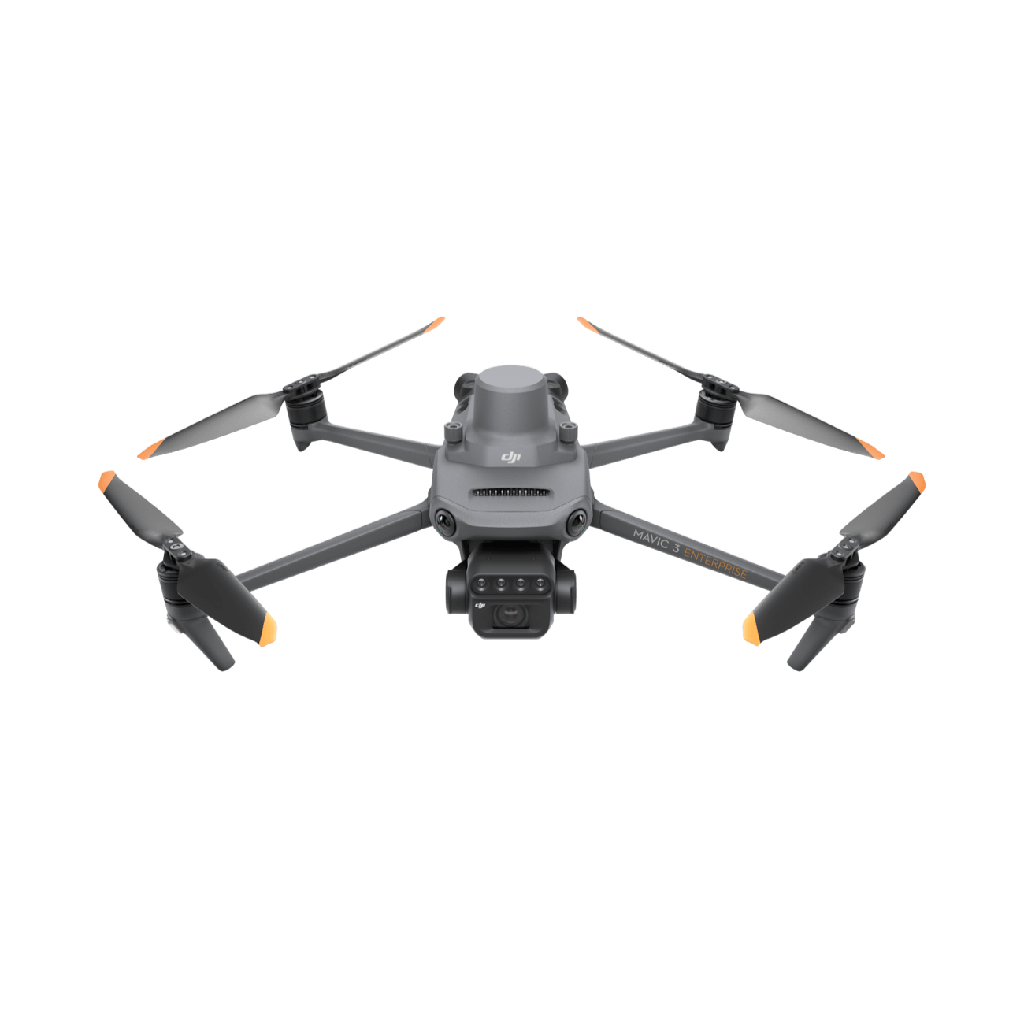
Before and after the application, we used a DJI Mavic 3 Multispectral to survey the site. The multispectral imagery gives us — and the landowner — a clear picture of existing vegetation health and coverage.
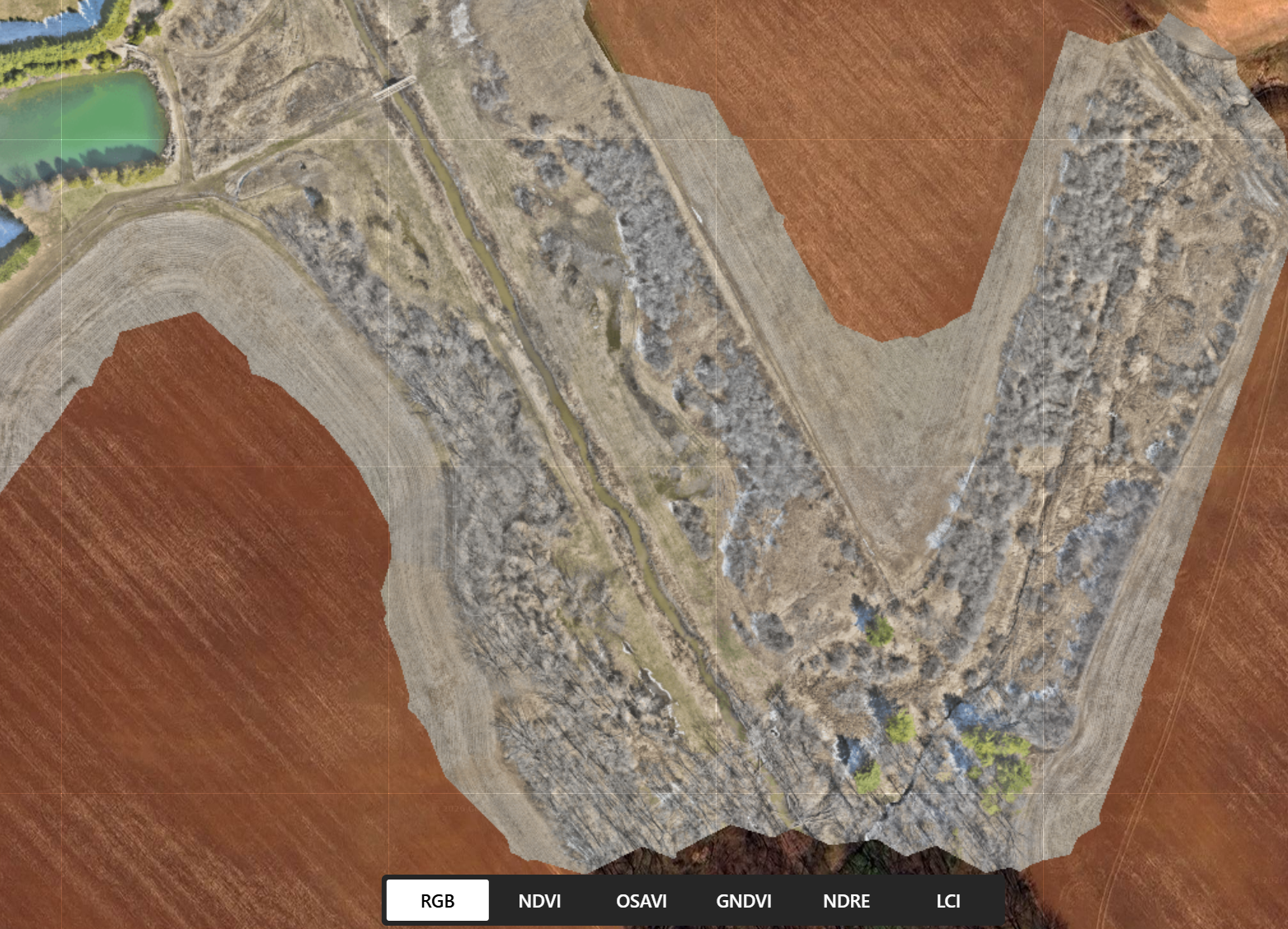
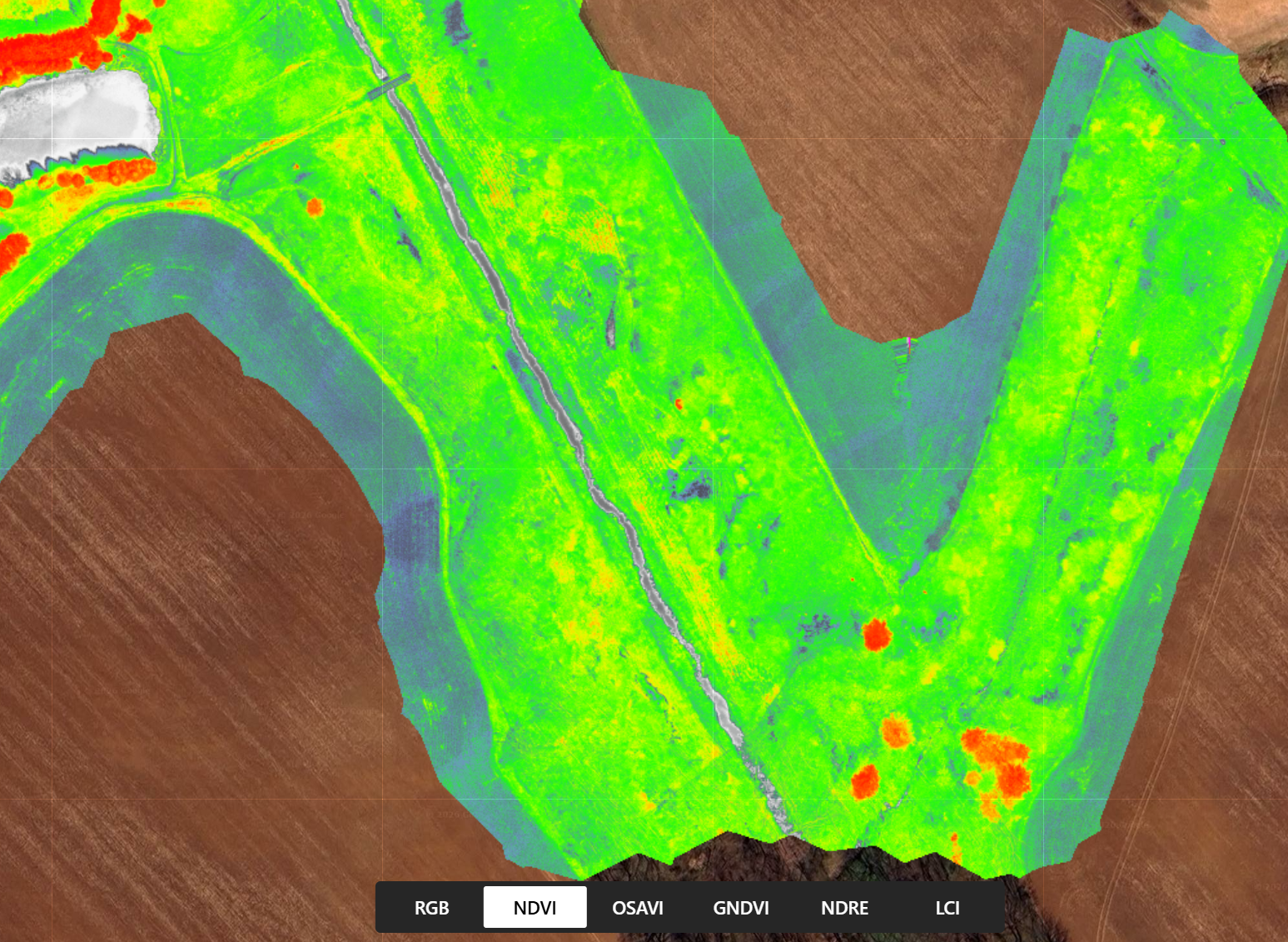
This kind of pre- and post-application mapping is invaluable for demonstrating results to the landowner and for dialling in application rates on future visits.
The Bottom Line
14 acres. Under 20 minutes of flight. Hilly, fenced, tree-filled, partially flooded terrain that would have been a nightmare for any ground-based method. That's the capability that agricultural drones bring to pasture management — and frost seeding is one of the best use cases out there.
If you're a pasture owner in Ontario or anywhere in North America and you've been thinking about frost seeding, reach out. The window is short, but the payoff lasts all season.
We're SkyFlow — a drone application team and equipment dealer with hands-on field experience. We don't just sell drones; we fly them professionally, every day, with our boots wet in the same fields as our customers. We share real pro tips from real jobs because we believe the industry gets better when we all learn together.
Follow us for more field reports and operator tips.
🌐 skyflow.ca | 🛒 shop.skyflow.ca
Serving North America customers from East to West, with care.
What do you need next?
Two quick paths: book spraying/scouting services, or explore ownership/financing options for drones and parts.
Get drone spraying, precision scouting, and variable-rate applications across Ontario. Fast scheduling and pro operation.
Browse drones, parts, and accessories. If you want a demo or need help choosing, we’ll guide you to the right setup.