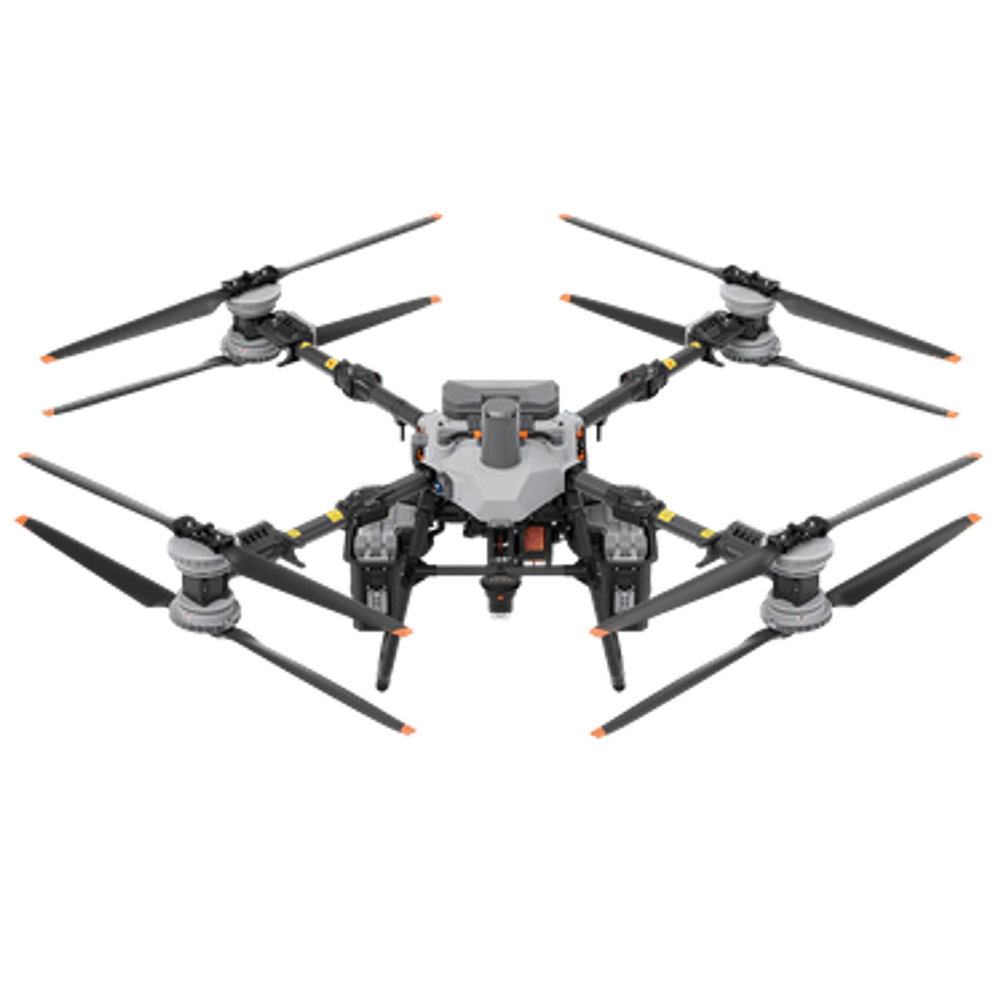
Drone-Assisted Rooftop Solar Panel Lifting with DJI FlyCart 100
Rooftop solar work is often limited less by electrical complexity and more by logistics. Before an installer ever lands a connector or tightens a clamp, someone has to move dozens or hundreds of panels from the unloading point to the roof:
- Over soft or muddy ground
- Around tight driveways and parked vehicles
- Past power lines, trees, and other obstacles
- Up onto roofs that aren’t friendly to traditional lifting gear
When this movement breaks down, crews spend their time walking and waiting instead of building arrays.
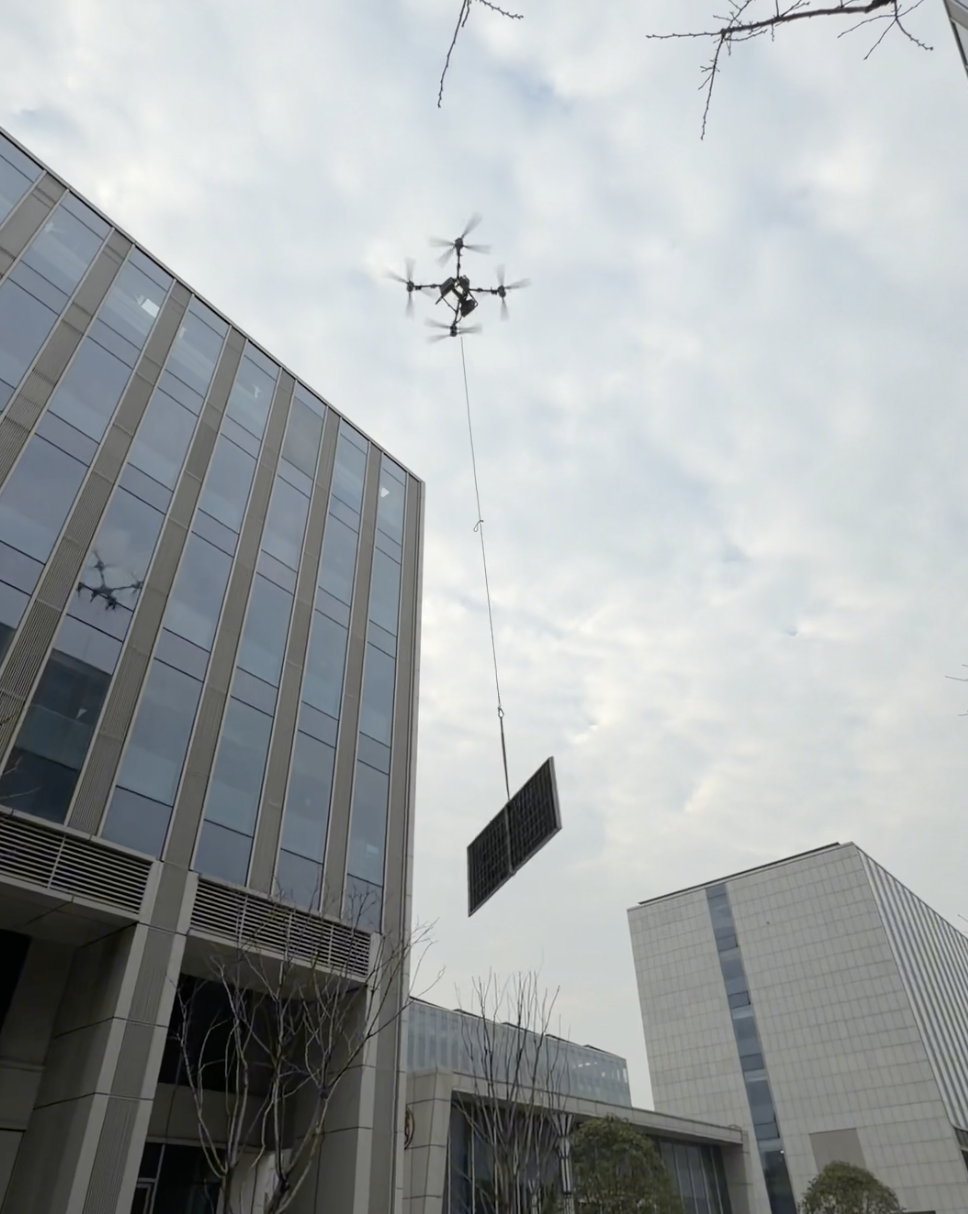
This post outlines a practical rooftop panel lifting scenario where a cargo drone — specifically the DJI FlyCart 100 (FC100) — becomes the primary “vertical conveyor” between ground staging and the installation point on the roof. It also explains why the FlyCart family is better aligned to these jobs than adapting a spray drone like DJI Agras T100 with a lifting module.
The traditional bottleneck: cranes and manual carry break first
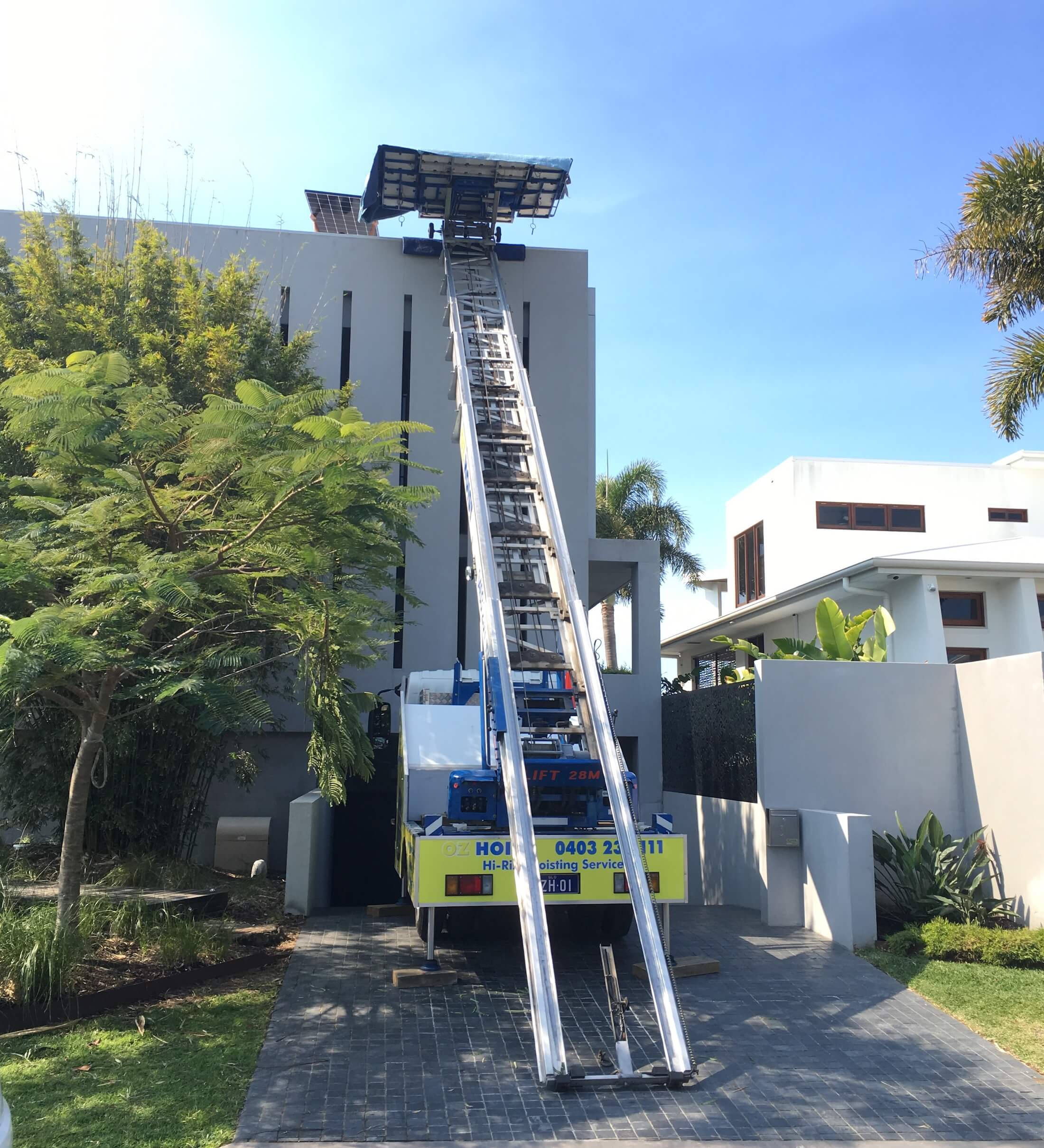
On paper, rooftop solar logistics are simple: land a crane or boom truck, lift pallets near the roof edge, and keep installers fed with materials.
On real jobsites, four kinds of constraints show up repeatedly:
1) Access failures
- Soft or muddy ground stops crane trucks from setting up safely.
- Tight laneways, trees, or parked vehicles can block outriggers or force the crane into a long reach that crushes effective capacity and drives up cost.
- Some residential and light-commercial roofs simply don’t have a safe landing pocket for a large piece of lifting gear.
2) Long carry distances
Even when a truck can unload on-site, the realistic unloading point might be:
- At the front street while the array is on the rear roof
- Down a lane, around obstacles, or across uneven ground
Every extra meter becomes repeated manual handling of fragile glass and steel.
3) Throughput mismatch
Install crews are often capable of much more work than the material flow supports. The bottleneck becomes:
- One or two people shuttling panels up ladders
- An undersized boom doing slow, high-cost picks
- Extended pauses while crews “wait for more panels”
This is pure efficiency loss: you are paying for installation time but feeding the roof like a small job.
4) Scheduling and weather risk
Cranes are:
- Expensive per day
- Tough to reschedule in peak construction season
When the plan changes or the site gets soft, the crane plan is usually the first thing to break, and the project eats the delay.
Why DJI FlyCart 100 fits rooftop lifting
DJI positions FlyCart 100 as a next-generation aerial delivery platform, built around logistics from day one. The focus is payload, safety, and delivery workflow:
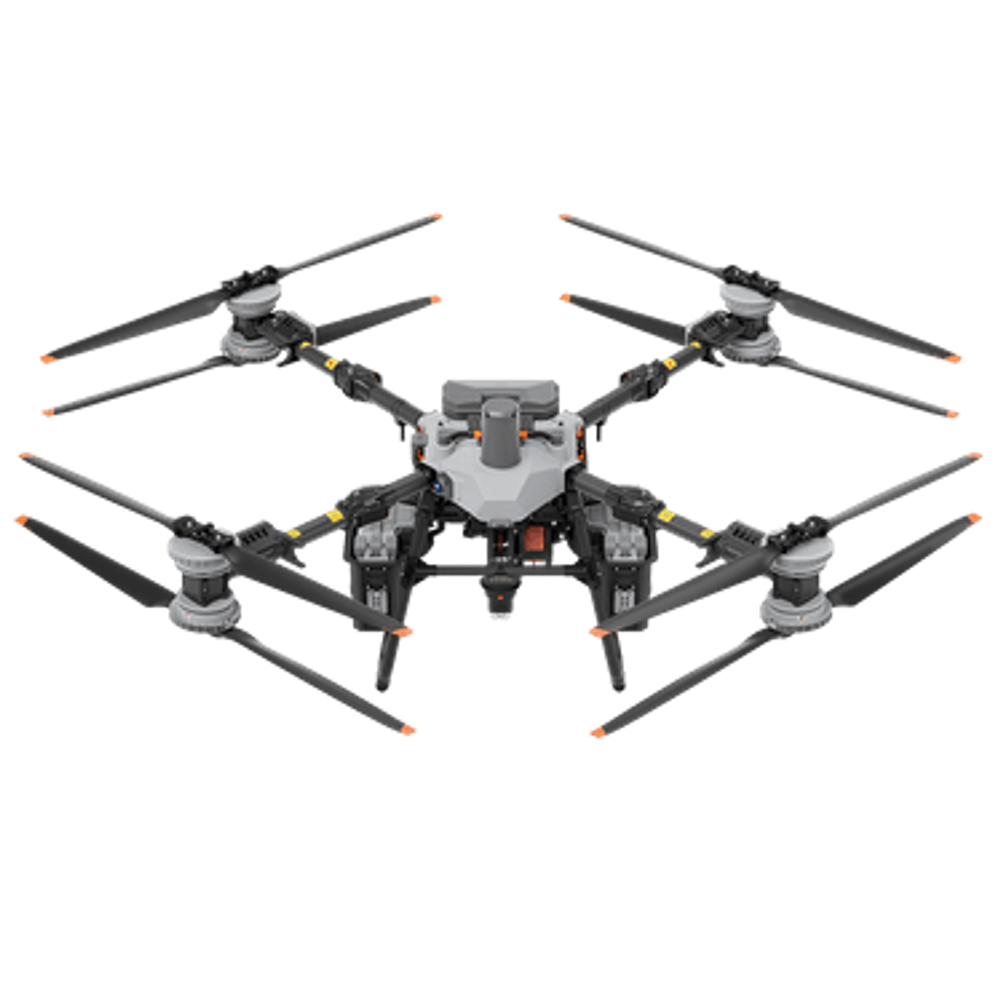
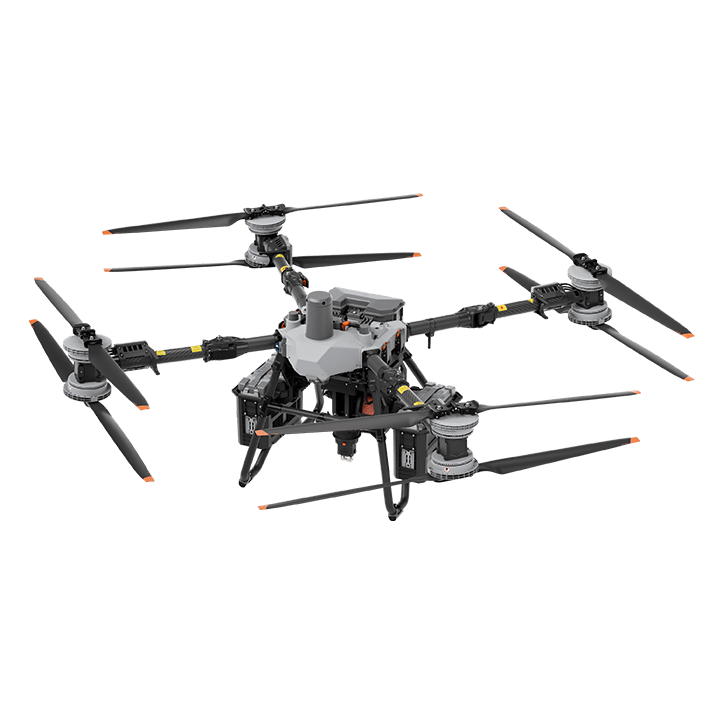
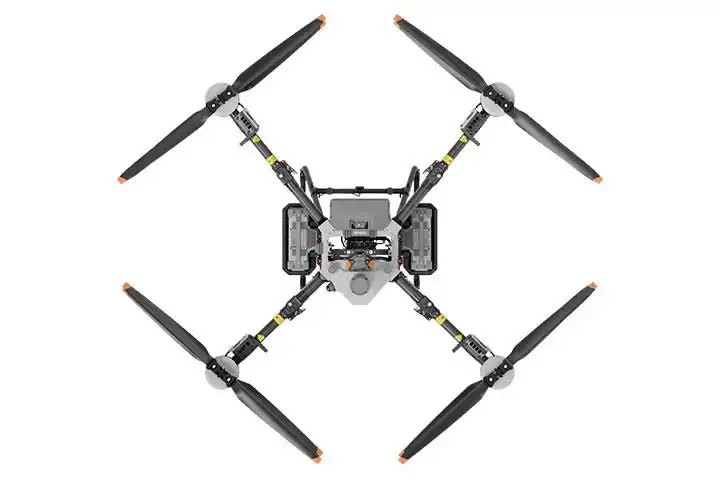
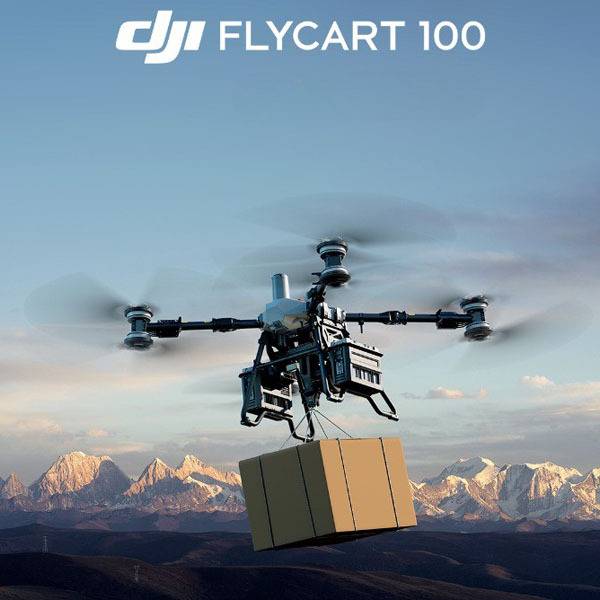
- Up to 100 kg payload in single-battery configuration
- Integrated winch system with controlled lowering
- Multi-sensor safety stack and integrated parachute
- Delivery-oriented software (DJI Delivery App, DJI DeliveryHub)
That combination maps well onto rooftop work, where the job is essentially a controlled winch loop between a ground pad and a rooftop pad.
1) Payload and power system built for transport
DJI describes FlyCart 100 as “carrying up to 100 kg,” highlighting a dual-battery design that balances redundancy with capacity:
- Single-battery mode: up to 100 kg payload
- Dual-battery mode: up to 85 kg payload
For rooftop solar, horizontal distances are typically short. The key constraint is not range but:
- Maximum safe payload
- Consistent handling of suspended loads
- Repeatability across dozens or hundreds of lifts
DJI also publishes payload vs distance reference points (for example, 65 kg for 12 km in dual-battery configuration, 80 kg for 6 km in single-battery). Those give a safety margin even when operating near buildings and infrastructure.
2) Winch and release functions that map cleanly onto rooftop workflows
Rooftop staging is fundamentally a winch problem: you want to lower a load into a tight drop zone, release fast, and immediately return for the next pick.
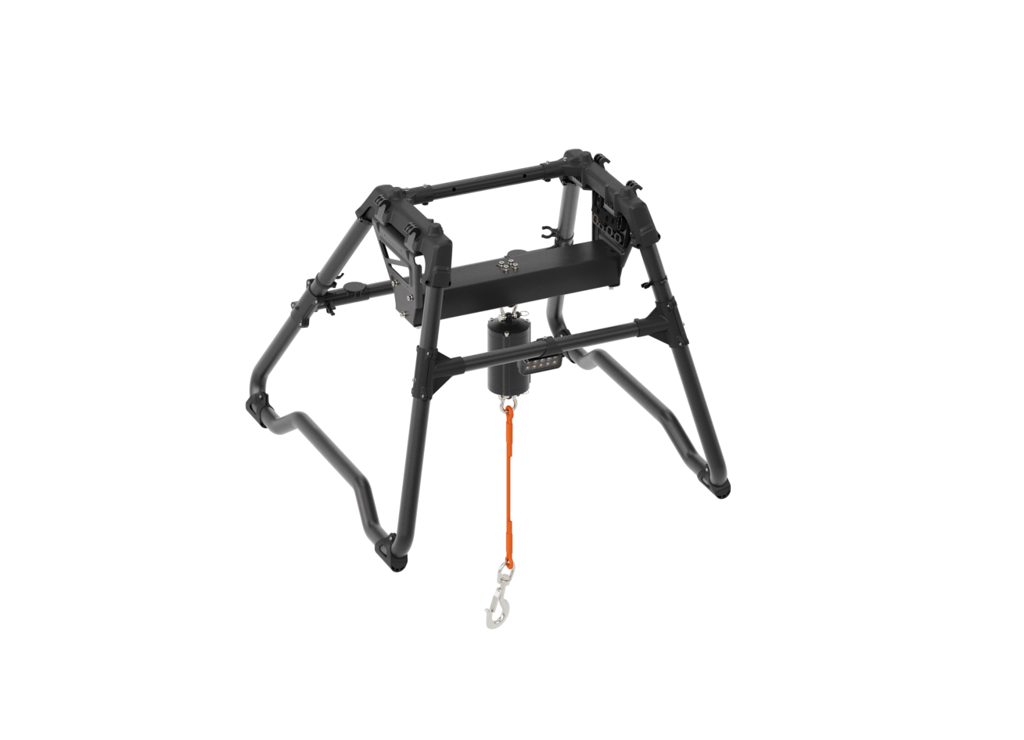
DJI’s FC100 winch system is specified with:
- 30 m cable
- Automatic and manual release/retrieval
- Up to 1.2 m/s retract speed for heavy loads
- An electric hook with active open/close and one-tap release
For rooftop solar, this means:
- The drone can hold a steady position in hover while the winch does the precision work.
- The receiving crew focuses on guiding and unhooking, not trying to manage a landing spot for the aircraft.
- Once the load is on the pad and the hook is released, the drone can immediately climb and return to the staging pad.
3) Swing control and load stability
Swing is the silent productivity killer in suspended-load work. It turns short flights into slow, nervous ones.
FC100’s winch feature set includes Auto Balance Control, which supports:
- Damping swing during acceleration and deceleration
- Stabilizing the load as it’s lowered to the roof pad
- Keeping the cable geometry predictable when the drone encounters small gusts
Every bit of swing control translates into:
- Less risk of contact with parapets, railings, and rooftop hardware
- Faster cycles, because the pilot spends less time waiting out oscillations
- More confidence for crews working under the load
4) Integrated parachute and multi-sensor safety stack
For work near people and buildings, safety layers matter as much as payload.
DJI’s FC100 launch materials describe:
- An integrated parachute that reduces touchdown speed to around 7 m/s
- A sensor stack that includes high-precision LiDAR, millimeter‑wave radar, and a penta‑vision system
Specifications also list:
- A parachute minimum opening height of 100 m
- Both manual and automatic deployment modes
The net effect: the aircraft is designed around delivery near human environments, with multiple layers intended to reduce risk if something goes wrong.
5) AR features that improve worker coordination
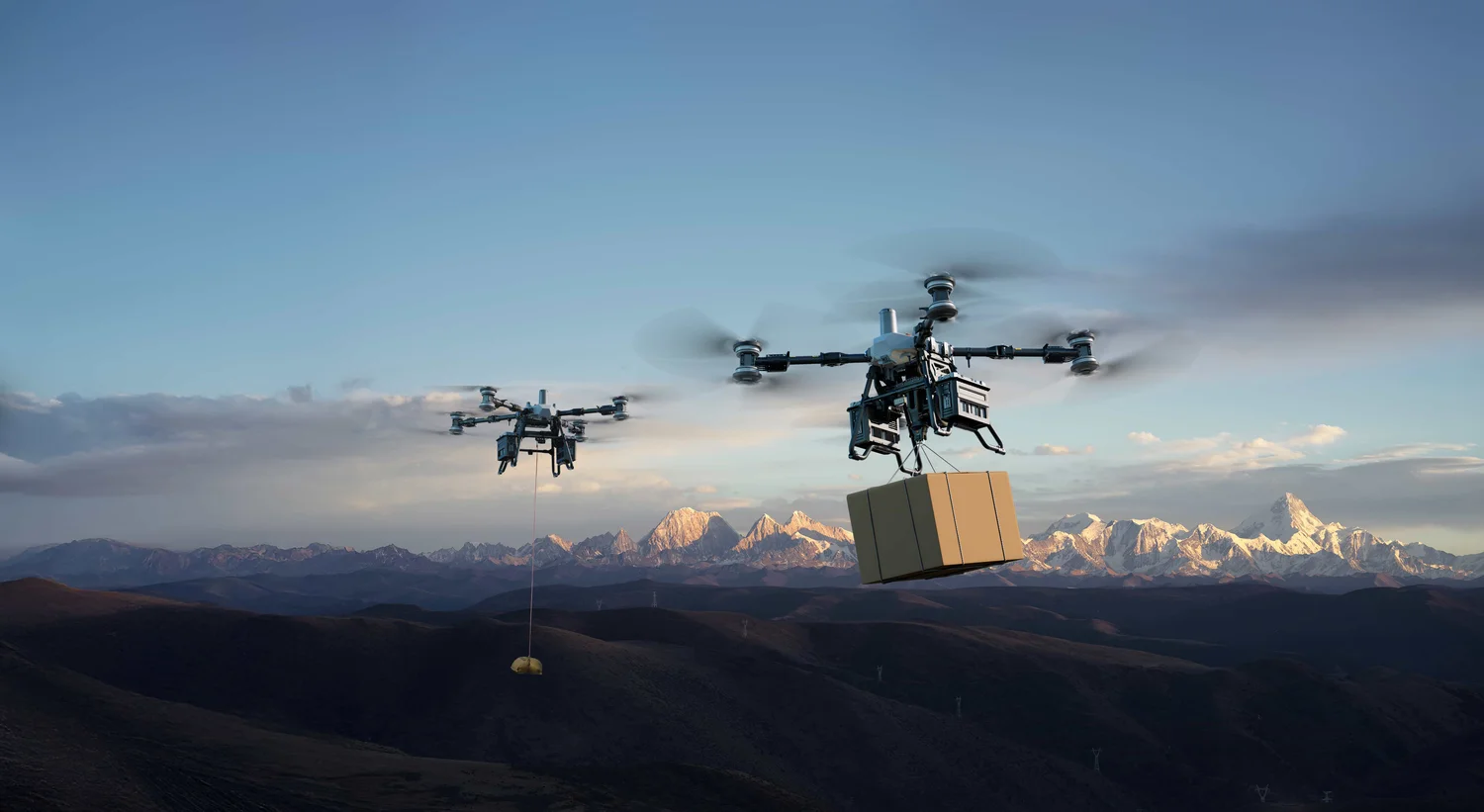
The DJI Delivery App for FC100 includes:
- A–B route operation modes
- AR Display and AR safety assistance features
In practice, that means:
- The pilot and ground crew can see virtual markers for the staging pad and rooftop pad.
- Paths and drop zones become repeatable, visible objects, not just “where we put it last time.”
For rooftop solar, AR markers make it easier to:
- Keep sight lines clear between operator and aircraft
- Brief new crew members on the flight corridor
- Enforce consistent approach paths across a multi-day project
What a rooftop panel lifting loop looks like with FlyCart 100
A practical FC100 rooftop lifting loop looks like a three‑station system:
Station A – Ground staging
- Panels arrive by truck and are staged on a ground pad.
- A lifting frame or spreader bar keeps the load stable under the winch.
- The FC100 electric hook connects to the lifting point in a consistent location.
The goal is to minimize:
- Time spent handling each panel individually
- Foot traffic and hand-carrying across the site
Station B – In-flight transport
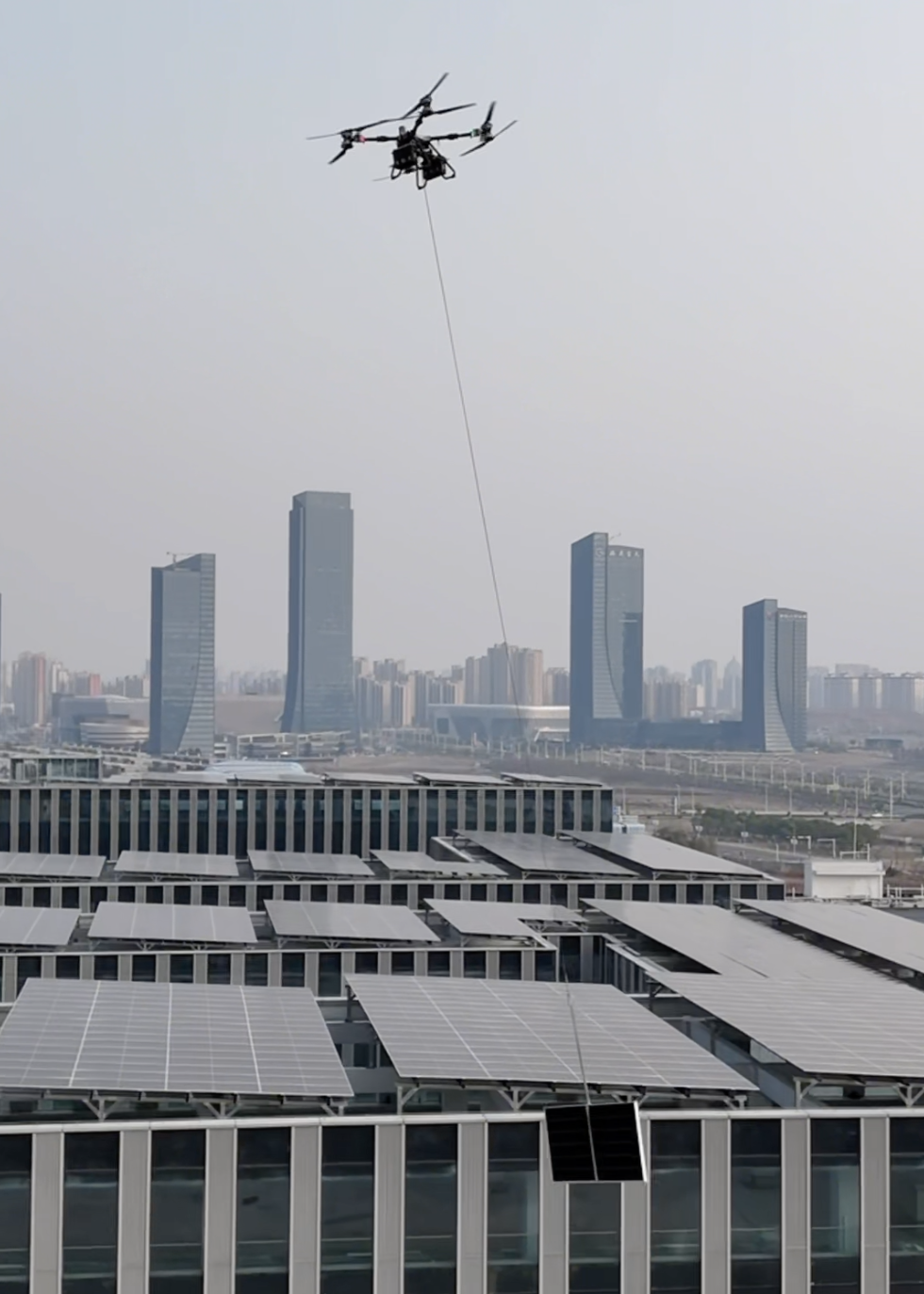
Station C – Rooftop receiving
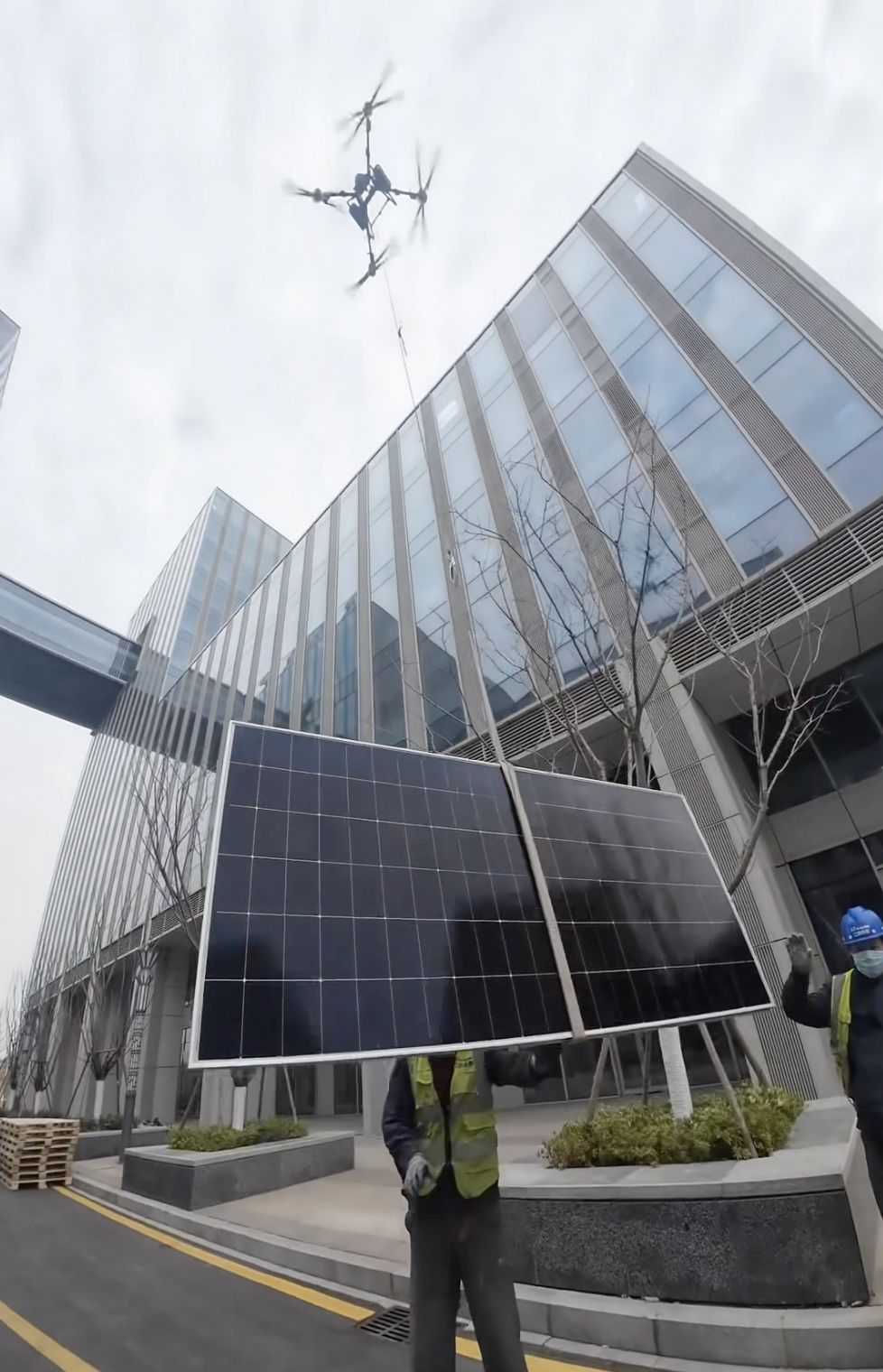
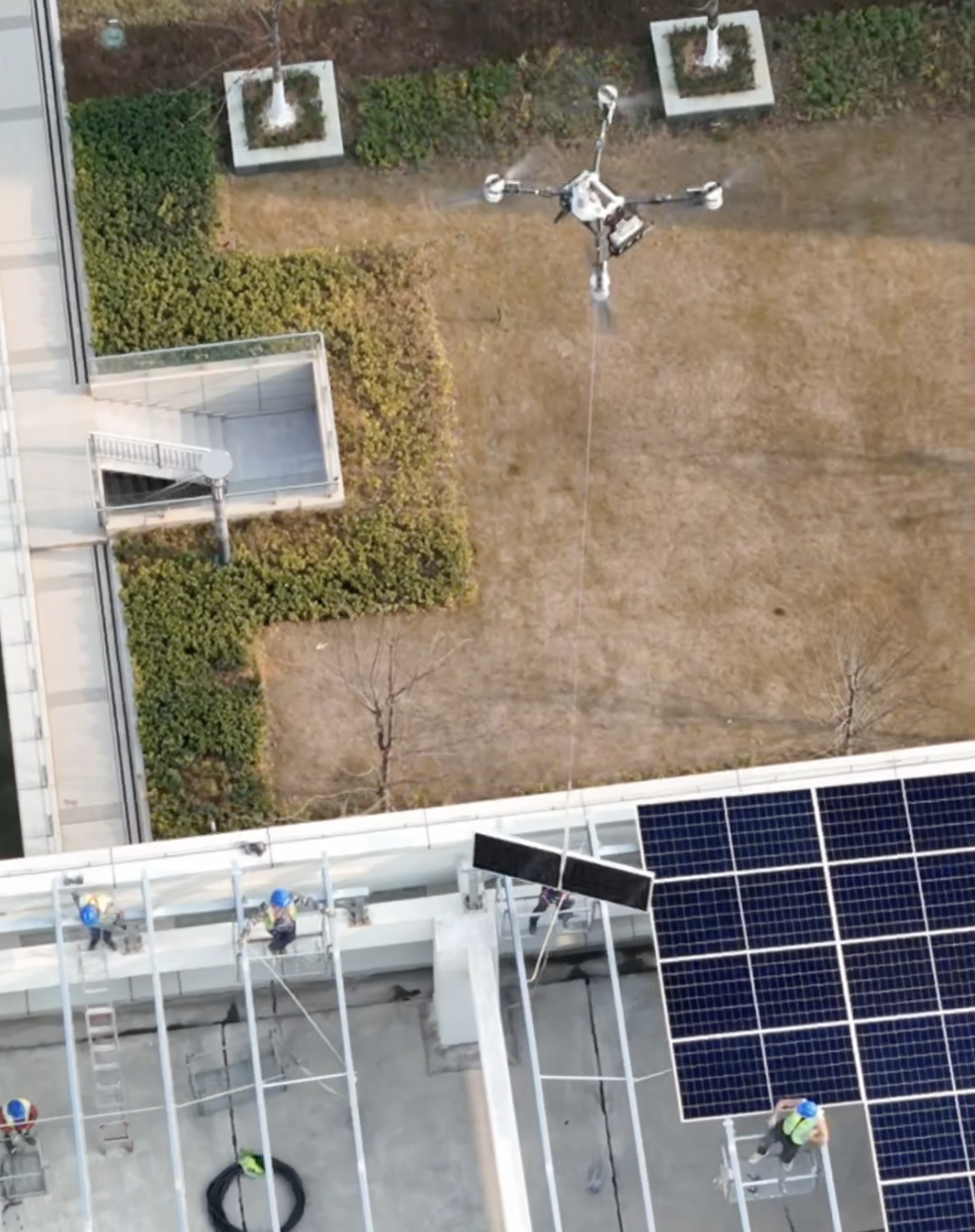
A lean crew model for this loop:
- 1 pilot (plus visual observer, as required under your operations manual)
- 1 ground loader at the staging pad
- 1 rooftop receiver at the landing pad
On many sites, this can replace:
- Multiple installers spending hours carrying panels up ladders
- On-and-off crane rentals that sit idle when weather or site conditions change
Throughput benchmarks: what we aim for internally
To make the scenario concrete, consider a standard crystalline silicon panel around 45 kg. In this use case, we assume:
- Two panels per lift, for a total suspended mass of ~90 kg
- Short horizontal distance between staging pad and building
- A rooftop height compatible with the winch’s 30 m range
Under those conditions, FC100’s published payload (up to 100 kg single-battery, 85 kg dual-battery) supports the two-panel lift class when configured appropriately.
Internal throughput targets (SkyFlow operational benchmarks):
- A trained crew can move around 460 panels per day on a suitable site with an optimized staging layout.
- That corresponds to 230 two-panel lifts.
- A conservative baseline is at least 200 panels per day, or 100 two-panel lifts, on more constrained sites.
Real-world throughput depends on:
- Roof height and horizontal distance
- Wind limits and weather windows
- Staging distance from the truck to Station A
- Number of battery sets and charging logistics
- Crew experience with the FC100 delivery workflow
The key point: when the loop is built properly, panel flow stops being the bottleneck. Installers are limited by how fast they can build the array, not by how fast materials arrive.
Canadian regulatory language: what “approved” actually means
For Canadian work, it’s important to use language that matches Transport Canada terminology.
Transport Canada defines an RPAS Safety Assurance system and states that:
“The RPAS Safety Assurance tells you what operations your drone is approved for.”
Advanced and Level 1 Complex operations include:
- Certain flights near people or in controlled airspace
- Operations with small and medium RPAS that meet specific risk and assurance criteria
Updated rules (including the medium RPAS framework) take effect starting November 4, 2025, with new requirements for medium-class drones.
For operations that fall outside the standard categories, Transport Canada uses SFOC‑RPAS processes and references SORA/SAIL concepts for risk assessment.
For a public-facing blog, the right style of line is:
Any FC100 rooftop lifting operation in Canada must be planned and flown under the appropriate Transport Canada approvals and Safety Assurance categories, based on the specific site, airspace, and operation profile.
That keeps the wording accurate and defensible, instead of loosely promising “approved” operations without context.
FC100 vs FC30 vs Agras T100 with lifting module
You could ask: why not just take a high‑payload spray drone like DJI Agras T100, bolt on a lifting module, and call it a day?
The short answer: payload numbers overlap, but the design intent and software stack do not.
FlyCart 100 and FlyCart 30: delivery platforms
- FC100 is built as an aerial delivery system:
- Delivery mission software (DJI Delivery App, DeliveryHub)
- Winch system tuned for suspended loads
- Integrated delivery safety stack (sensors, parachute, AR tools)
- FlyCart 30 is similarly positioned, with:
- 5–30 kg payload in dual-battery, 5–40 kg in single-battery emergency configurations
- 20 m winch
- Swing control and AR-assisted operations
These platforms are optimized for repetitive A–B transport, not for spraying or granular spreading.
Agras T100: agriculture-first with lifting as a module
DJI’s T100 is primarily an agriculture platform:
- Spray tank, boom, and nozzle systems
- Spreading systems for fertilizer and seed
- Lifting modules as additional options
Support material for T100 lifting modules typically cites:
- Standard lifting module payload around 100 kg
- Dual-battery lifting module payload around 80 kg
- Triaxial force sensors and control logic designed to reduce swinging
In rural, open-area lifting scenarios where you want dual‑use between agriculture and basic lifting, the T100 lifting module can make sense.
For rooftop solar, however, the advantages of FC100/FC30 are:
- Delivery‑oriented mission software and AR tools
- A winch system designed around repetitive drops into tight pads
- A safety stack intended for operations near people and structures, not just over fields
If your work is primarily logistics on and around buildings, FlyCart is the more natural fit.
Products mentioned in this workflow
This post focuses on a rooftop lifting workflow built around delivery and lifting platforms. On the shop side, you can explore:
- DJI FlyCart 100 (FC100) – heavy-lift delivery drone for rooftop logistics and industrial transport.
- DJI T100 Dual Battery Lifting System – dedicated lifting module for DJI Agras T100 where rural/open-area lifting and ag work need to share hardware.
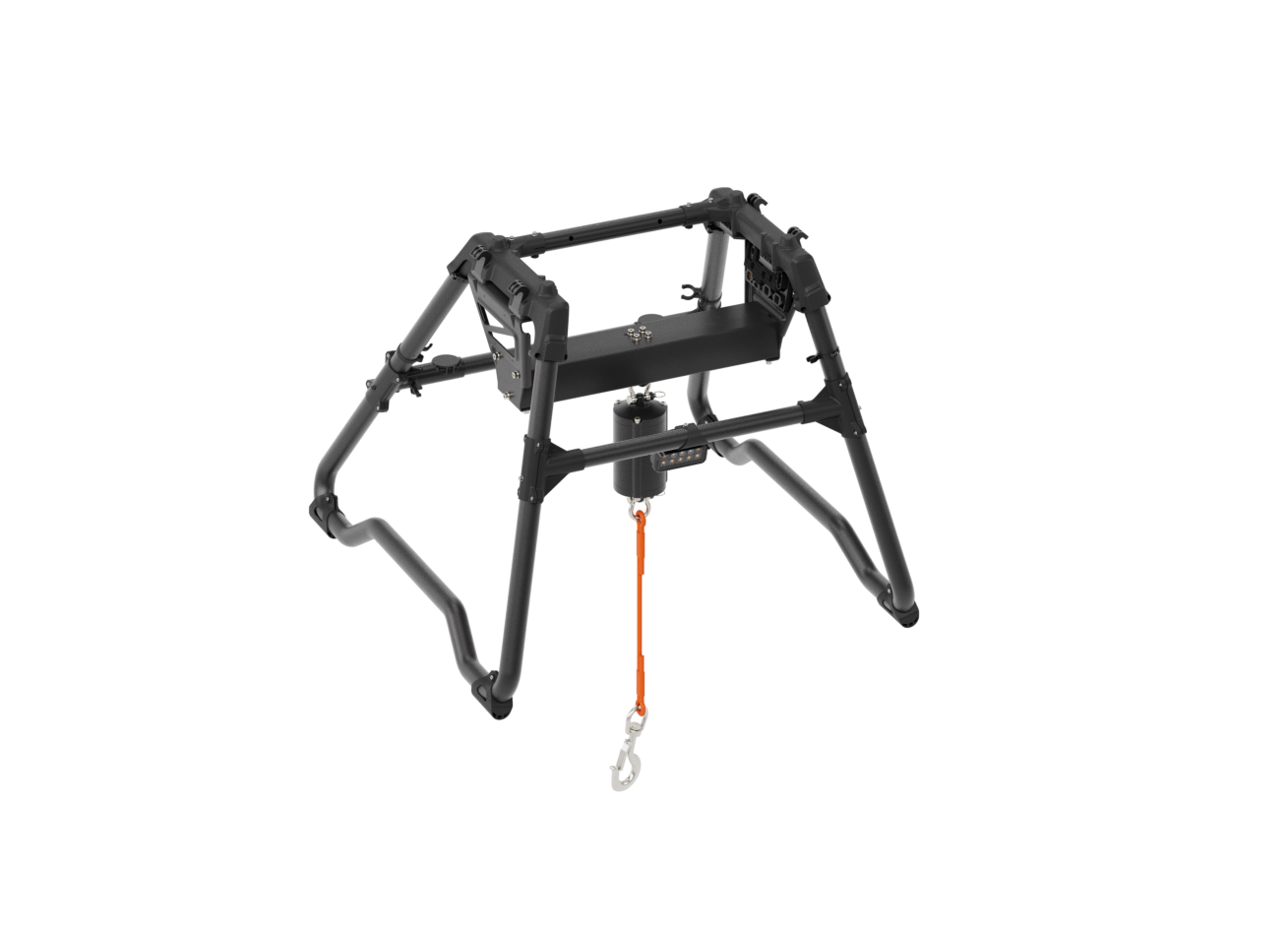
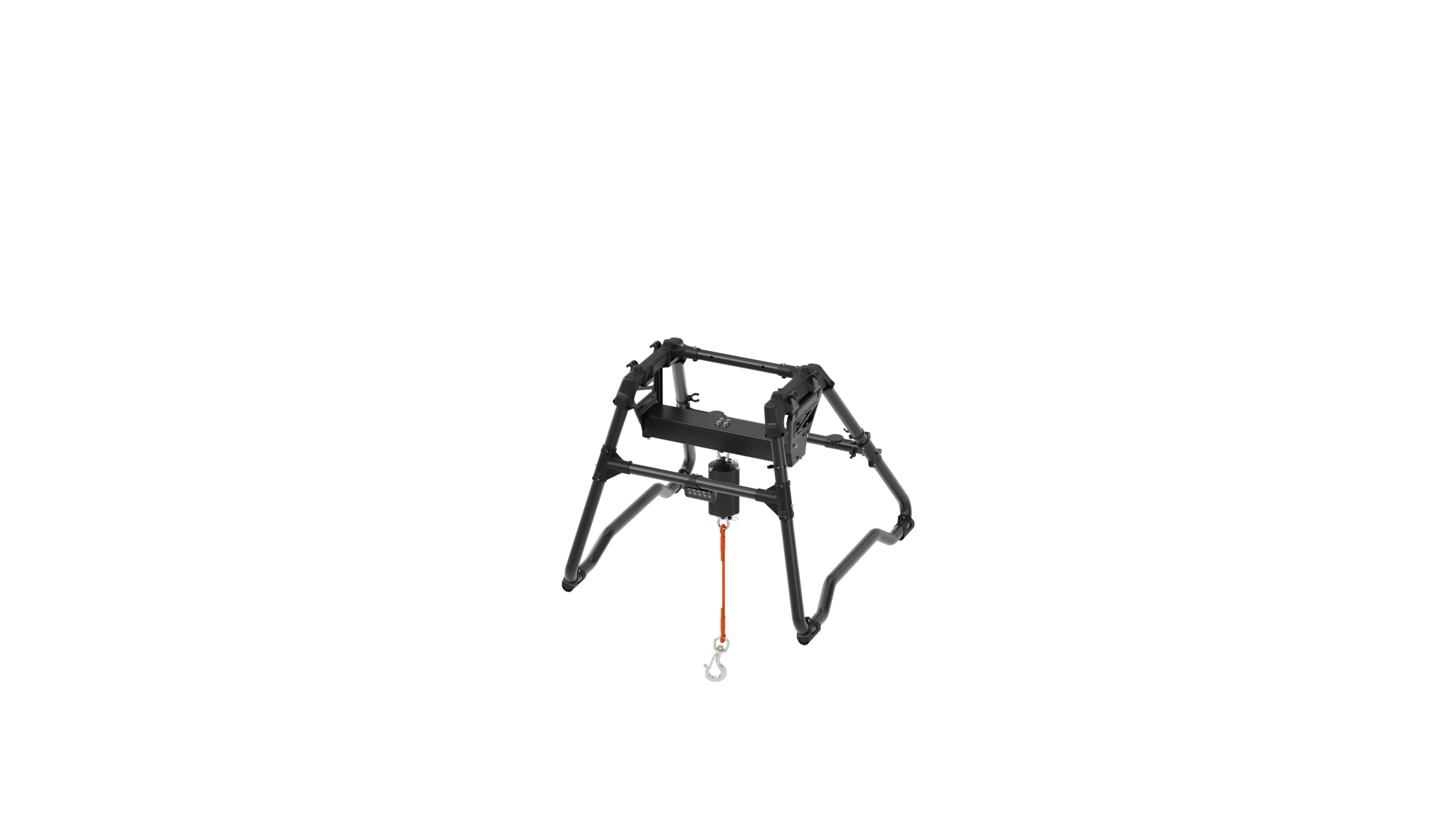
These product cards are intended to complement (not replace) a proper conversation about approvals, site constraints, and throughput targets for your specific projects.
What SkyFlow provides around rooftop lift programs
A drone is only one part of a rooftop lift system. The rest is the operating system around it: planning, training, and day‑to‑day support.
SkyFlow supports Canadian customers with:
- Mission planning for real sites
- Mapping ground staging, flight corridors, and rooftop pads
- Considering obstacles, power lines, wind corridors, and no‑fly areas
- Building repeatable A–B routes and winch profiles
- Pilot training for delivery workflows
- FC100 and FlyCart 30 operation, winch use, and emergency procedures
- Coordination between pilot, loader, and rooftop receiver
- Use of DJI Delivery App and AR tools in real jobsites
- Hardware selection guidance
- Choosing between FC100, FlyCart 30, and, where appropriate, Agras T100 lifting configurations
- Matching payload class and throughput targets to the right platform
- Integrating rooftop lifting with other drone workflows (inspection, mapping, documentation)
- Ongoing support and software enablement
- Firmware and software updates
- Workflow improvements as your crews gain experience
- Integration with other operational data (jobs, lifts, and array documentation)
If you’re looking at rooftop solar jobs where panel movement, not wiring, is the bottleneck, drone-assisted lifting may be the piece that unlocks your schedule and margins.
Talk to SkyFlow
If you’d like to explore a drone-assisted rooftop lifting workflow for your projects in Canada, SkyFlow can help you:
- Evaluate whether FC100 or FlyCart 30 fits your use case
- Build a realistic throughput model for your sites
- Plan training and compliance steps for Transport Canada operations
Contact SkyFlow to discuss your project and see what a tailored rooftop lifting workflow could look like for your team.
What do you need next?
Two quick paths: book spraying/scouting services, or explore ownership/financing options for drones and parts.
Get drone spraying, precision scouting, and variable-rate applications across Ontario. Fast scheduling and pro operation.
Browse drones, parts, and accessories. If you want a demo or need help choosing, we’ll guide you to the right setup.