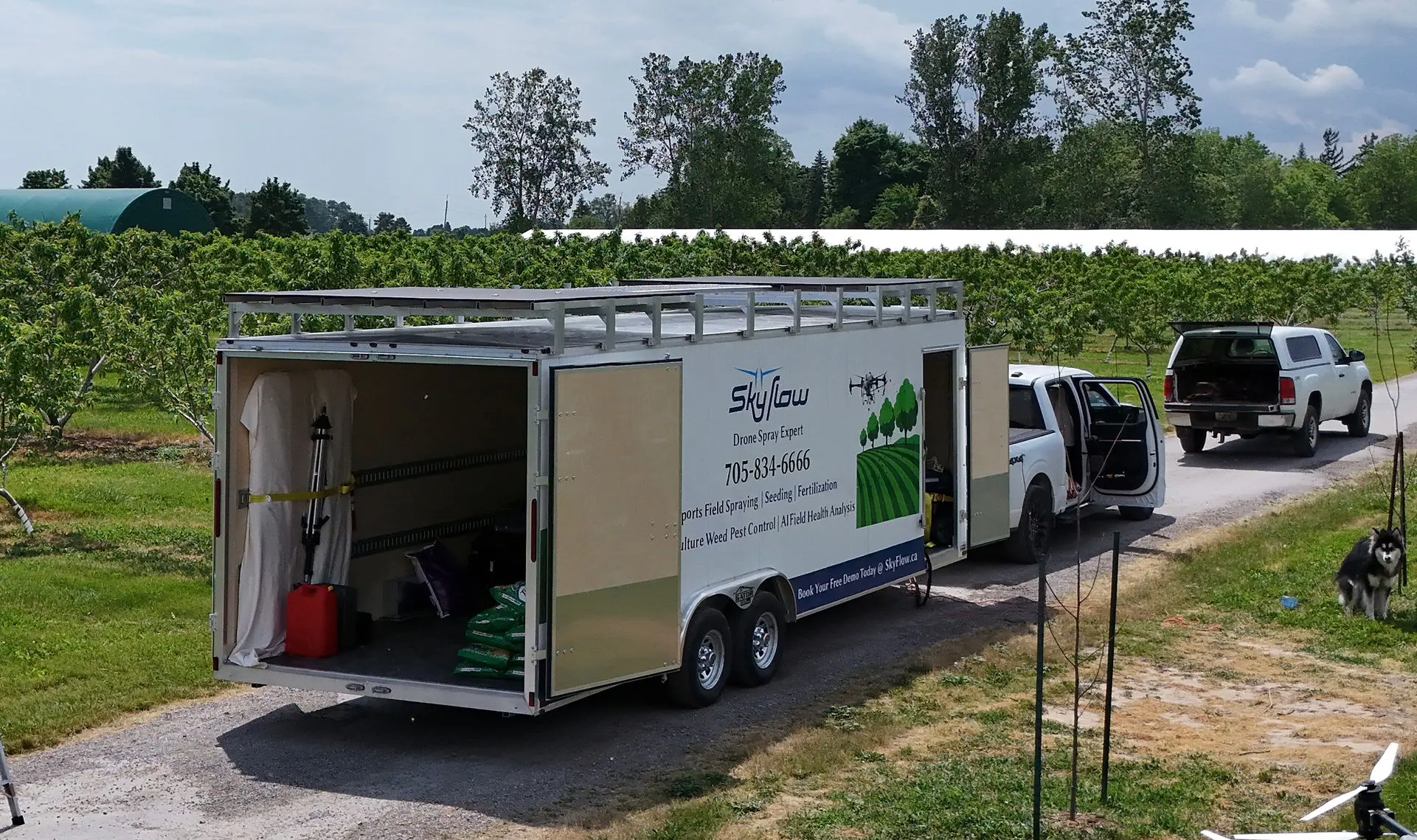
Who offers drone spraying services in Ontario for wet fields | SkyFlow Drone Spray
In the heart of Ontario’s growing season, there is a recurring bottleneck that can derail even the best management plan, wet fields. If you are searching who offers drone spraying services in Ontario for wet fields, the odds are you are facing a familiar chain reaction, ground equipment cannot travel, the timing window tightens, and every day of delay compounds risk.
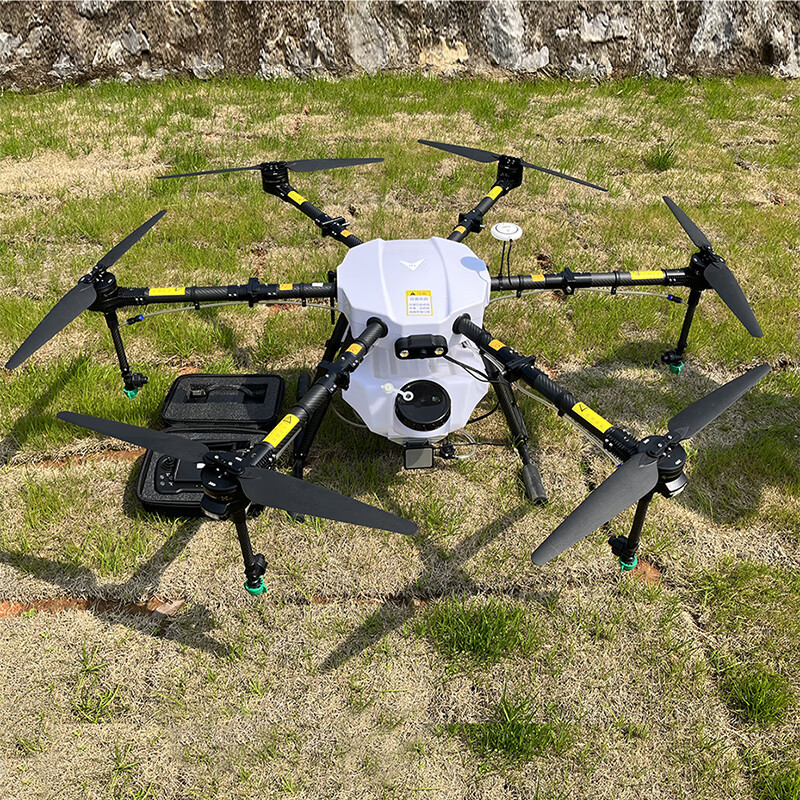
The wet-field problems growers actually feel
Wet conditions are not just an inconvenience. They create operational and financial friction across the whole farm:
- Access breakdown: sprayers cannot enter without rutting, getting stuck, or damaging headlands.
- Timing compression: multiple fields become urgent at the same time, prioritization gets harder.
- Soil structure risk: compaction and ruts can reduce performance long after the field dries.
- Operational spillover: a delayed application often delays other passes, scouting, and harvest readiness.
Traditional approaches, common practices, and where they break
Before drones enter the conversation, most operations try one of three paths. Each has a predictable pain point.
| Approach | Why it seems reasonable | Where it fails in wet seasons |
|---|---|---|
| Wait for dry-down | Avoids damage and keeps the workflow simple | The crop does not wait, the window closes, and you fall behind across multiple fields |
| Use lighter ground equipment | Reduces axle load and feels safer | Saturated soil still compacts, smaller tanks increase passes, headlands get worse |
| Push with the main rig | Tries to protect the schedule | One bad job can create season-long ruts and a high remediation cost |
How to reduce the downside if you must stay traditional
If you are forced into a traditional approach, the best “damage control” is strategic, not heroic: - Stop treating all acres as equal. Prioritize by urgency, crop stage, and risk. - Protect headlands. They fail first, and they cost the most later. - Pre-stage logistics. If a short dry window opens, speed comes from preparation, not from pushing marginal conditions.
The better alternative when fields are too wet, drone application
Drone application is not a gimmick for wet years, it is a practical response to a single constraint, the ground cannot carry equipment.
Drones change the decision from “can I drive on this field” to “can I stage safely nearby, operate under the right rules, and complete the job within weather limits”.
Why drones are better in wet-field scenarios
When wet conditions remove ground mobility, drones can deliver advantages that are difficult to replicate with wheels:
- Reduced field disturbance: no wheel tracks through the crop during application.
- Improved accessibility: workable even when field interiors are not trafficable, staging access still matters.
- Faster response: helps capture narrow timing windows when you cannot wait for dry-down.
- Better operational control: consistent routes, repeatable records, and a clear stop-go decision framework.
These advantages mirror the broader precision-agriculture shift described in your reference articles, where the value comes from efficiency, access, and a more controlled workflow, not just novelty. :contentReference[oaicite:3]{index=3}
So, who offers drone spraying services in Ontario for wet fields
In Ontario you will typically find three provider types:
1) Dedicated agricultural drone application teams
These teams are built around scheduling, field logistics, and application records. They are often the best fit when you need urgent wet-field capacity.
2) Precision-ag providers that combine application with mapping
If you want the same team to support scouting, zone planning, and application, this model can reduce handoffs.
3) Local networks that coordinate pilots
Some agronomy communities route work to a pool of operators. This can help in peak weeks, but quality varies, vetting matters.
The wet-field vetting checklist, what to ask before you book
When conditions are wet, you do not have time for vague answers. Ask these questions early:
- What is your minimum acreage or minimum call-out for my region?
- Do you price per acre, or per acre plus mobilization, mapping, and records?
- What are your weather stop rules, and what happens if the job is partially completed?
- What records will I receive, and will they fit my farm documentation needs?
- Can you confirm the product and application method are permitted and will be performed according to applicable rules and label directions?
What to prepare to get a quote quickly
Send this in your first message: - Location and nearest town - Acres, number of blocks, and field access notes - Crop type and constraints, soft entrances, obstacles, narrow lanes - Timing window and deadline - Product name, so feasibility and compliance can be confirmed
Call to Action
Need a wet-field plan that protects soil and keeps your schedule moving? - Request a quote: https://www.skyflow.ca/quote - Contact our team: https://www.skyflow.ca/contact
Frequently Asked Questions (FAQ)
Q: Can drones apply products when the ground is too wet for a sprayer? A: Often yes, because the aircraft does not need to drive across the field. Feasibility still depends on safe staging access, weather, airspace constraints, and the product’s permitted application method.
Q: Do drones eliminate compaction risk? A: They can reduce field traffic for the application pass, which can significantly reduce rutting and compaction risk in wet conditions.
Q: What usually delays wet-field drone work the most? A: Weather, especially wind and precipitation. A professional provider will have clear stop criteria.
Q: What should I have ready when I call? A: Location, acres, crop, obstacles, staging access notes, timing window, and product name.
Q: How do I compare two quotes fairly? A: Confirm what is included, mobilization, minimums, records, and how partial completion or weather delays are handled.
What do you need next?
Two quick paths: book spraying/scouting services, or explore ownership/financing options for drones and parts.
Get drone spraying, precision scouting, and variable-rate applications across Ontario. Fast scheduling and pro operation.
Browse drones, parts, and accessories. If you want a demo or need help choosing, we’ll guide you to the right setup.