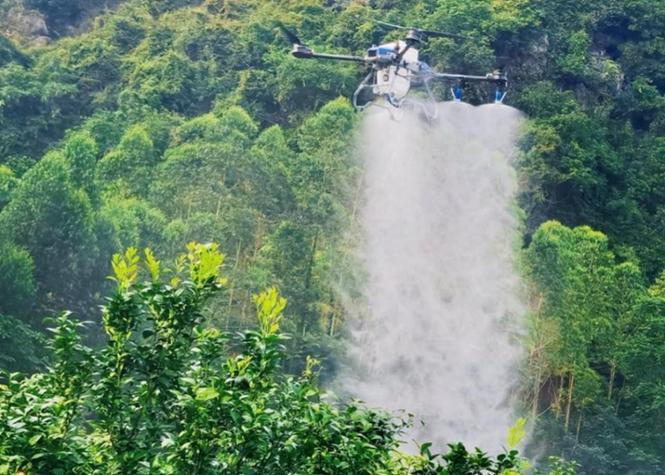
Maximizing Yield with Drone Technology: A Guide to Variable Rate Application
In the heart of Canada's agricultural landscape, from the sprawling fields of Ontario to the vast prairies of the West, farmers are constantly seeking innovative ways to enhance productivity and sustainability. The convergence of technology and agriculture has paved the way for revolutionary practices, and at the forefront of this movement is Variable Rate Application (VRA), a key component of precision agriculture. When combined with the power of drone technology, VRA offers an unprecedented opportunity to maximize yields, optimize resource allocation, and foster a more sustainable farming future. This guide will delve into the intricacies of VRA, the transformative role of drones, and how Canadian farmers can leverage these technologies for a more profitable and efficient operation.
What is Variable Rate Application (VRA)?
Variable Rate Application is a precision agriculture technique that involves applying inputs—such as fertilizers, pesticides, and seeds—at varying rates across a field, rather than applying a uniform rate to the entire area. The core principle of VRA is to address the inherent variability within a field. Factors such as soil type, nutrient levels, topography, and moisture content can differ significantly from one part of a field to another. VRA acknowledges these differences and tailors the application of inputs to meet the specific needs of each zone, thereby optimizing resource use and maximizing crop performance [1].
As the Government of Saskatchewan highlights, VRA can be applied to a wide range of inputs, with variable rate nitrogen fertilization being one of the most common applications in Canadian agriculture [2]. The ultimate goal of VRA is to move away from a one-size-fits-all approach and embrace a more data-driven, site-specific management strategy.
| VRA Objective | Description |
|---|---|
| Increase Yields | By applying more inputs to high-potential areas and reducing inputs in low-potential areas, farmers can boost overall yield. |
| Optimize Input Costs | VRA helps to avoid over-application of expensive inputs in areas where they are not needed, leading to significant cost savings. |
| Enhance Crop Quality | Tailoring nutrient application can lead to more uniform crop growth and improved quality characteristics. |
| Improve Environmental Sustainability | By applying inputs more precisely, VRA minimizes the risk of nutrient runoff and other environmental impacts. |
Why is VRA Important for Canadian Farmers?
Canadian agriculture is characterized by its diversity, with a wide range of crops, soil types, and climatic conditions. This variability makes a compelling case for the adoption of VRA. For farmers in Ontario and across Canada, VRA offers a powerful tool to address several key challenges and opportunities:
- Managing Field Variability: Canadian fields often exhibit significant variability in soil characteristics and topography. VRA allows farmers to manage this variability effectively, ensuring that each part of the field receives the optimal amount of inputs.
- Navigating Economic Pressures: With fluctuating commodity prices and rising input costs, farmers are under constant pressure to improve their economic efficiency. VRA can help to improve the bottom line by optimizing input use and maximizing yields.
- Promoting Sustainable Practices: There is a growing emphasis on sustainable agriculture in Canada. VRA aligns with this trend by promoting the responsible use of resources and minimizing the environmental footprint of farming operations.
The Role of Drones in VRA
Drones, or Unmanned Aerial Vehicles (UAVs), have emerged as a game-changing technology in precision agriculture. They provide a cost-effective and efficient way to collect high-resolution data about crop health and field conditions. This data is then used to create prescription maps that guide VRA equipment.
Here's how drones are revolutionizing VRA:
- Data Acquisition: Drones equipped with multispectral or hyperspectral sensors can capture detailed imagery of a field. This imagery can be used to create various data layers, such as Normalized Difference Vegetation Index (NDVI) maps, which indicate crop health and vigor.
- Prescription Map Generation: The data collected by drones is processed using specialized software to create prescription maps. These maps divide the field into different management zones and specify the application rate for each zone.
- Variable Rate Application: The prescription maps are then loaded into the control systems of VRA-capable equipment, such as sprayers and spreaders. As the equipment moves through the field, it automatically adjusts the application rate according to the prescription map. Drones themselves can also be equipped with sprayers to perform variable rate applications, offering a highly targeted and efficient solution.
How to Get Started with Drone-Based VRA
Adopting drone-based VRA may seem like a daunting task, but it can be broken down into a series of manageable steps:
- Define Your Objectives: The first step is to clearly define what you want to achieve with VRA. Are you looking to increase yields, reduce costs, or improve crop quality? Having clear objectives will help you to develop a targeted VRA strategy.
- Assess Your Fields: Identify the fields that have the most variability and are likely to benefit the most from VRA. You can use a combination of tools, such as yield maps, satellite imagery, and your own knowledge of the fields, to assess variability.
- Choose the Right Technology: Select the drone and sensor technology that is best suited to your needs. There are many different options available, so it's important to do your research and choose a system that is reliable and easy to use.
- Collect and Analyze Data: Once you have the right technology, you can start collecting data. This data will need to be processed and analyzed to create prescription maps.
- Implement and Evaluate: The final step is to implement your VRA strategy and evaluate the results. This will involve using VRA-capable equipment to apply inputs according to your prescription maps and then monitoring the crop response.
Introducing SkyFlow: Your Partner in Precision Agriculture
While the benefits of drone-based VRA are clear, the process of implementing it can be complex and time-consuming. That's where SkyFlow comes in. SkyFlow is a leading provider of drone-based solutions for precision agriculture in Canada. We offer a comprehensive suite of services and products to help farmers harness the power of drone technology and VRA.
With SkyFlow, you can:
- Access Cutting-Edge Drone Technology: We provide access to the latest drone and sensor technology, ensuring that you have the best tools for the job.
- Benefit from Expert Data Analysis: Our team of experts will process and analyze your drone data to create accurate and reliable prescription maps.
- Receive Customized VRA Recommendations: We will work with you to develop a customized VRA strategy that is tailored to your specific needs and objectives.
- Seamlessly Integrate with Your Existing Equipment: Our solutions are designed to integrate seamlessly with your existing VRA-capable equipment.
At SkyFlow, we are committed to helping Canadian farmers succeed. We believe that drone technology and VRA have the potential to transform agriculture, and we are here to help you every step of the way.
Frequently Asked Questions (FAQs)
Q: Is VRA only for large farms?
A: Not at all. VRA can be beneficial for farms of all sizes. The key is to identify fields with significant variability where VRA can make a difference.
Q: What is the return on investment for VRA?
A: The return on investment for VRA can vary depending on a number of factors, such as the crop, the level of variability in the field, and the cost of inputs. However, many farmers find that the cost savings from optimized input use and the increased revenue from higher yields more than offset the initial investment.
Q: Do I need to be a tech expert to use drones for VRA?
A: While some technical knowledge is helpful, you don't need to be a tech expert to use drones for VRA. Companies like SkyFlow offer comprehensive training and support to help you get started.
Conclusion
Variable Rate Application, powered by drone technology, represents a significant leap forward for Canadian agriculture. By embracing this innovative approach, farmers can unlock new levels of productivity, profitability, and sustainability. The journey to precision agriculture may seem challenging, but with the right partners and technology, it is a journey worth taking.
Ready to take your farm to the next level? Contact SkyFlow today to learn more about our drone-based solutions for Variable Rate Application.
References
[1] Canola Council of Canada. "The path to variable (optimum) rate application." https://www.canolacouncil.org/canola-watch/fundamentals/the-path-to-variable-rate-application/
[2] Government of Saskatchewan. "Variable Rates Treatments: Precision Farming Applications." https://www.saskatchewan.ca/business/agriculture-natural-resources-and-industry/agribusiness-farmers-and-ranchers/crops-and-irrigation/soils-fertility-and-nutrients/variable-rates-treatments-precision-farming-applications
What do you need next?
Two quick paths: book spraying/scouting services, or explore ownership/financing options for drones and parts.
Get drone spraying, precision scouting, and variable-rate applications across Ontario. Fast scheduling and pro operation.
Browse drones, parts, and accessories. If you want a demo or need help choosing, we’ll guide you to the right setup.