How much does custom drone application cost per acre in Ontario | SkyFlow Drone Spray
Ontario growers ask about per-acre pricing for a simple reason, they need to budget quickly. The problem is that “per acre” can hide the real drivers of cost. If you want a meaningful answer to how much does custom drone application cost per acre in Ontario, you need to understand the pain points that inflate cost, the common pricing structures, and the questions that prevent surprise fees.
The real cost problems behind “per acre”
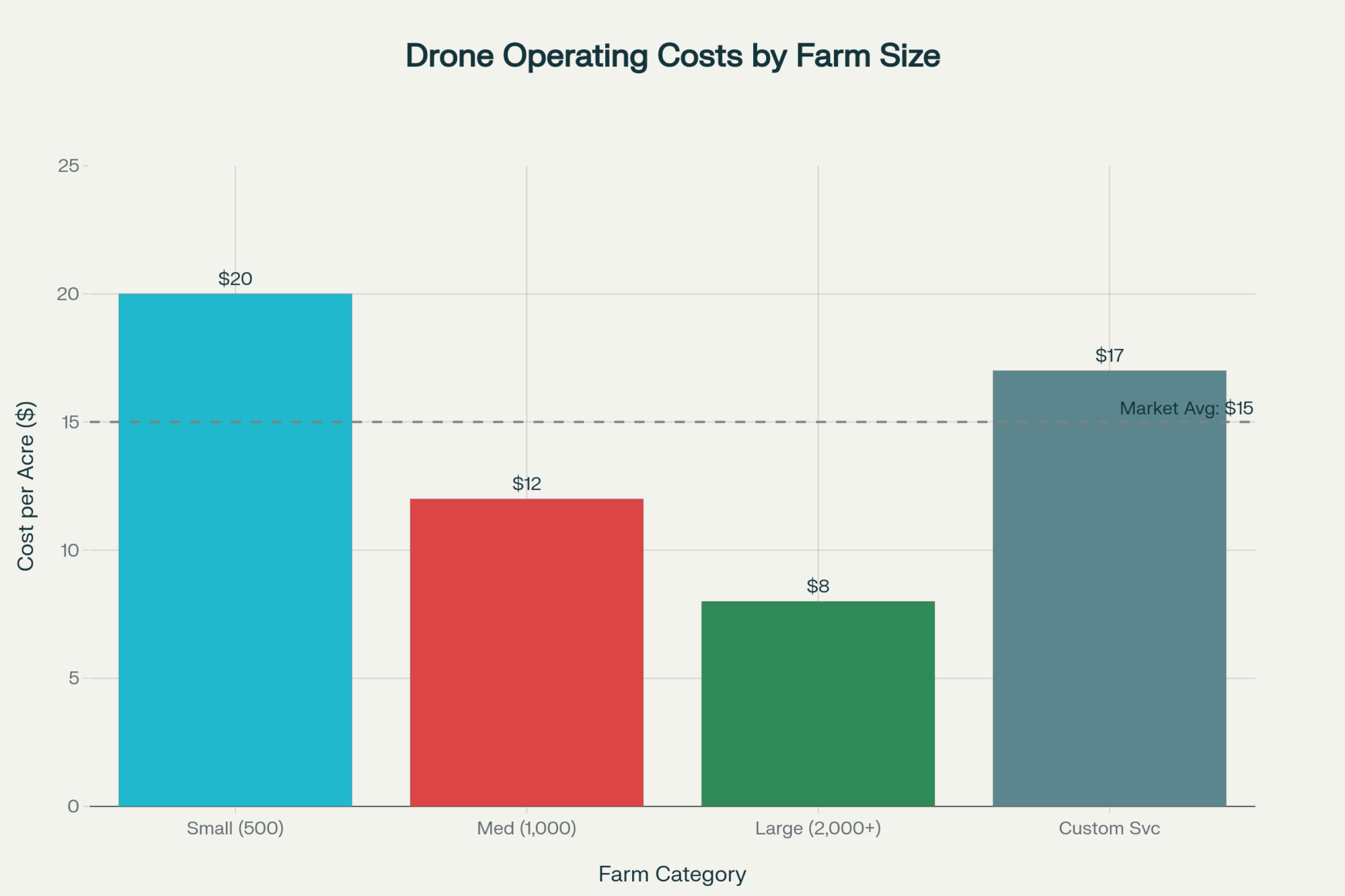
Most pricing confusion comes from operational realities: Small blocks take longer per acre than large contiguous fields. Obstacles and staging constraints add setup time that does not scale down. Orchards and dense canopy reduce throughput compared to open fields. Weather stop-start creates partial completion and rescheduling complexity. * Compliance and documentation add effort that reputable operators will not skip.
Traditional cost thinking, and why it breaks
Many growers compare drone pricing directly to ground equipment cost per acre. That is incomplete because wet seasons and access constraints introduce indirect penalties, compaction, crop damage, schedule collapse, and remedial fieldwork.
Your reference cost-benefit article frames this well, the “true cost” includes both direct operating costs and indirect outcomes like compaction and efficiency losses. :contentReference[oaicite:6]{index=6}
How pricing is usually structured in Ontario
Here are the common models you will see:
| Pricing model | What it means | Where surprises happen |
|---|---|---|
| Per acre | A single rate per treated acre | Minimum call-outs, mobilization, and partial completion are not always explicit |
| Per acre + mobilization | Per-acre plus a travel or setup fee | If travel zones are unclear or you add fields late |
| Minimum acres or minimum call-out | A floor price for small jobs | When you assumed small acreage would be cheap |
| Bundled with mapping or scouting | One package for data and application | If scope is not defined, outputs vary |
What drives your quote up or down
A useful rule of thumb is that quotes reflect throughput and complexity: - Acreage and block layout, number of fields, shape complexity - Crop structure and canopy, open field versus dense canopy - Staging access, refill points, distance to safe setup areas - Obstacles and hazard profile, lines, roads, nearby sensitive areas - Timing window pressure, urgency and weather probability
The best way to get an apples-to-apples quote
Send the same checklist to every provider, then compare.
Quote checklist (copy and paste)
- Location and nearest town:
- Total acres and number of blocks:
- Crop type and canopy notes:
- Timing window and deadline:
- Access notes, staging location, soft entrances, narrow lanes:
- Obstacles, lines, roads, nearby sensitive areas:
- Product name:
- Required documentation format:
Ask these five questions
1) What is included in the rate, and what is separate? 2) Is there a minimum call-out or minimum acres? 3) What triggers rescheduling, and how is partial completion handled? 4) What records do I receive after the job? 5) What is the plan if weather changes mid-job?
How SkyFlow approaches quoting
We quote to remove ambiguity: - We confirm location, acreage, access, and timing constraints upfront - We clarify minimums, mobilization, and what is included - We document stop criteria and post-job records as part of a professional workflow
Call to Action
If you want a quote that is specific to your fields and constraints: - Request a quote: https://www.skyflow.ca/quote - Contact our team: https://www.skyflow.ca/contact
Frequently Asked Questions (FAQ)
Q: Why do small jobs cost more per acre? A: Setup time, staging, and safety planning do not scale down linearly, so throughput per hour drops.
Q: Are orchards and dense canopy typically priced differently? A: Often yes, because the operational complexity and throughput profile differ from open fields.
Q: Is mobilization always included? A: Not always. Confirm whether travel, setup, and staging logistics are included or billed separately.
Q: What information speeds up quoting the most? A: Location, acres, block count, access notes, timing window, and product name.
Q: How do I avoid surprise fees? A: Ask for a line-item explanation, minimums, mobilization, and how partial completion is handled.
References
- Drone spraying vs. traditional methods, cost-benefit framing and indirect benefits discussion.
What do you need next?
Two quick paths: book spraying/scouting services, or explore ownership/financing options for drones and parts.
Get drone spraying, precision scouting, and variable-rate applications across Ontario. Fast scheduling and pro operation.
Browse drones, parts, and accessories. If you want a demo or need help choosing, we’ll guide you to the right setup.